How a Solar Hot Water System Works
Your old hot water unit is on its last legs, the power bill has just landed, and someone has mentioned solar. Fair enough. Heating water is one of the bigger energy costs in most homes, and you pay it every day of the year. A solar hot water system cuts that cost by letting the sun do most of the heating.
One thing to clear up first, because it trips a lot of people. This isn't the same as solar panels. Solar panels make electricity. A solar hot water system heats water directly, using collectors on the roof and a storage tank.
This guide is for Sydney homeowners weighing one up. It's also for people who already own one and want to keep it running. You'll find how the systems work, the two collector types, boosters, costs and rebates, and the common problems. Want advice for your own roof? 24/7 Local Plumbers can help.
Every solar hot water system has the same three parts.
Collectors, tank and booster
Collectors on the roof absorb heat from the sun and pass it to water, or to a fluid that then heats the water. The hot water is stored in an insulated tank until you need it. A booster, either electric or gas, tops up the temperature when there hasn't been enough sun.
Roof-mounted tank vs split system
There are two layouts:
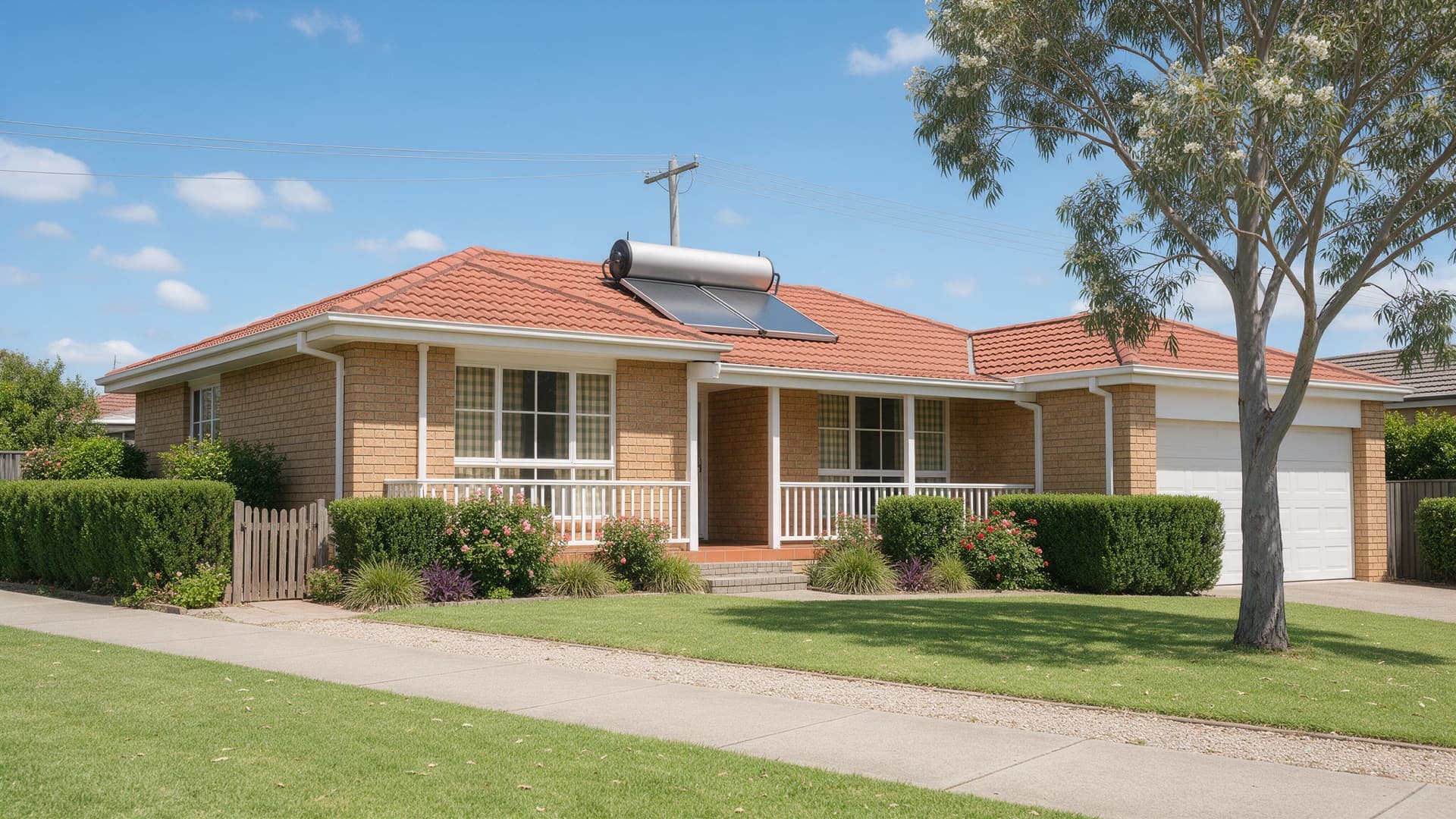
- Thermosiphon (close-coupled). The tank sits on the roof directly above the collectors. Hot water rises into the tank naturally, so there's no pump. Your roof has to be able to carry the weight of a full tank.
- Pumped (split) system. The collectors are on the roof and the tank is on the ground. A small pump moves water between them. It's lighter on the roof and less visible from the street.
Which one suits you comes down to your roof's strength and how much hot water your household gets through. A family of five and a retired couple won't land on the same system.
Flat Plate vs Evacuated Tube Collectors
The collector is the part doing the work, and there are two main designs.
Flat plate collectors
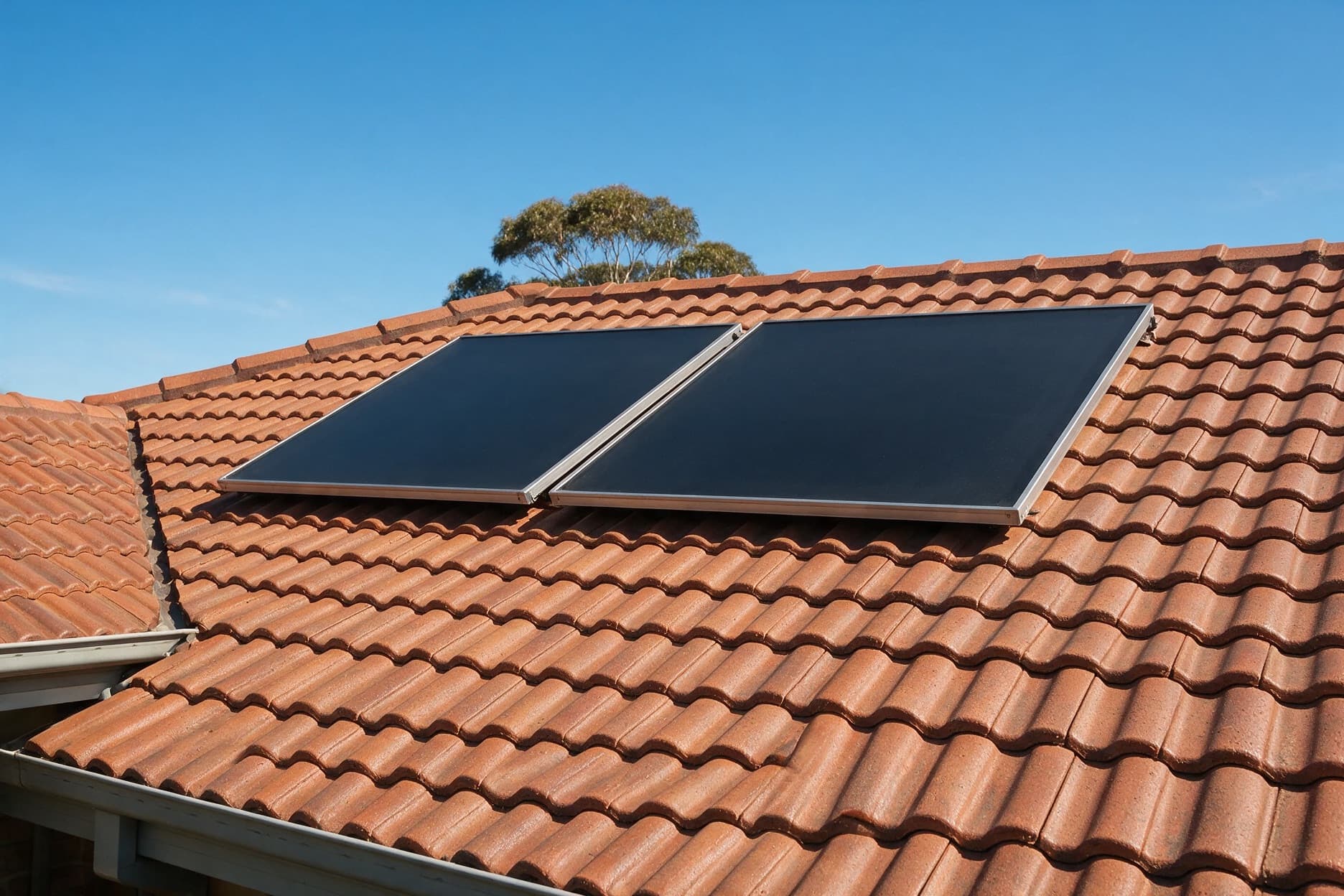
A flat plate collector is a shallow, glazed box with a dark absorber plate and pipes inside. Look along any Australian street and it's the design you'll spot most often. Simple, sturdy, and usually the cheaper option.
Evacuated tube collectors
Evacuated tube collectors are rows of glass tubes, each with a vacuum layer that works like a thermos to hold heat in. They lose less heat in cold or windy weather and collect well when the sun is low. They usually cost more upfront.
In most of Sydney, either type works well on a north-facing roof with little shade. Evacuated tubes are worth a closer look in the Blue Mountains and other colder pockets.
| Flat plate | Evacuated tube | |
|---|---|---|
| Upfront cost | Usually lower | Usually higher |
| Cold and overcast weather | Loses more heat | Holds heat better |
| Appearance | Low, flat panel | Rows of glass tubes |
| Repairs | Whole panel is one unit | Single tubes can be replaced |
| Good fit for | Sunny, north-facing roofs | Cooler or frost-prone areas, less ideal roof angles |
Boosters: Does Solar Hot Water Use Electricity?
Yes, a little. People are sometimes surprised by that, but a solar hot water system isn't fully independent of the grid.
Electric boost
An electric element in the tank heats the water when the sun hasn't. A pumped system also uses a small amount of electricity to run the pump. A booster on a timer or an off-peak tariff costs far less to run than one that switches on whenever it likes.
Gas boost
A gas booster heats the water as it leaves the tank, only when it's below temperature. It's a common choice for homes that already have a gas connection.
Either way, the booster is there as a backup. On a well-sized system in a sunny spot it should only be doing a small share of the work for most of the year. If yours seems to run every day, something isn't right.
Tip
If your system has a manual booster switch, leave it off most of the time. NSW Climate and Energy Action suggests only turning it on after several cloudy or rainy days in a row.
Is a Solar Hot Water System Worth It in Sydney?
Sydney gets enough sun for solar hot water to do most of the work across the year. That part isn't in doubt. Whether it suits your home is a different question, and the answer is mostly sitting on top of your house.
Roof direction, shade and space
A solar hot water system performs best on a north-facing roof that isn't shaded by trees or neighbouring buildings. You need clear space for two or three collectors, and for a roof-mounted tank the structure has to take the load. A heavily shaded or south-facing roof is a poor candidate, and no brand of collector will change that.
Solar hot water vs a heat pump
A heat pump is the other efficient option. It pulls heat from the air, so it doesn't need roof space or direct sun, and it sits on the ground like a normal tank.
Solar hot water systems make sense when you have a good north-facing roof and high hot water use. A heat pump is often simpler when the roof is shaded, crowded with solar panels or hard to access. Our guide to cutting your hot water bill with a heat pump walks through that option.
What a Solar Hot Water System Costs and the Rebates Available
How much does a solar hot water system cost?
NSW Climate and Energy Action puts the cost of installing a solar water heater at $4,000 to $8,000, depending on the size, model and installer. The same source estimates savings of $190 to $700 a year on energy bills.
Where you land in that range depends on tank size, collector type, how easy the roof is to get onto, and whether the plumbing or wiring needs changing. A second storey and a steep pitch usually cost more than a single-storey roof you can reach off a ladder.
Small-scale technology certificates
Under the Australian Government's Small-scale Renewable Energy Scheme, eligible systems earn small-scale technology certificates (STCs). Most people assign them to the installer in return for a discount on the quote. Only models on the Clean Energy Regulator's register are eligible for small-scale technology certificates, so ask for the model number before you sign.
NSW incentives
At the time of writing, the NSW Government lists a discount of up to $900 for replacing an old electric water heater with an electric-boosted solar water heater, through an accredited provider. Incentives change, so check the current figures before you rely on them. The installation must be done by a licensed plumber or electrician to qualify.
Common Problems With Solar Hot Water and Basic Maintenance
A well-installed system runs for years with little attention. When something does go wrong, it's usually one of a short list. These are the common problems with solar hot water that owners call about.
Solar hot water not heating
If the water is lukewarm on a sunny day, the usual causes are:
- A failed circulation pump or controller on a split system.
- Air trapped in the collector lines.
- Dirty or shaded collectors. Trees grow, and the gum that was knee-high when the system went in may now be shading it by mid-afternoon.
- A faulty sensor telling the system the tank is already hot.
If the water is cold after cloudy days, the booster is the place to look: a tripped switch, a failed element or thermostat, or a gas booster that isn't lighting. Our guide to a hot water system not working covers the general checks.
Leaks and valves
Water dripping from the roof or the tank is often a relief valve doing its job, or one that has worn out. Constant dripping, rust stains or water around the base of the tank need a plumber.
Solar hot water system maintenance
- Look over the collectors a couple of times a year for cracked glass, leaks and new shade.
- Keep the glass reasonably clean. Rain does most of it.
- Have a licensed plumber service the system on the schedule in the manufacturer's manual. That includes the relief valves, the sacrificial anode in the tank and, on closed-circuit systems, the heat-transfer fluid.
Avoid
Don't climb onto the roof to work on the collectors yourself. The falls risk is real, and the pipework can be scalding hot.
When to Call a Licensed Plumber
Call a plumber when:
- You have no hot water, or the booster is running constantly.
- Water is leaking from the collectors, pipework or tank.
- The system is over 10 years old and hasn't been serviced.
- You're replacing an old electric or gas unit and want to know if solar suits your roof.
We install, repair and replace solar, heat pump, gas and electric units through our hot water systems service across Sydney.
Need help from a licensed plumber? $0 call-out fee, available 24/7, Sydney-wide. Call 1300 138 780.
Key Takeaways
- A solar hot water system heats water directly with roof collectors and stores it in an insulated tank. A gas or electric booster covers cloudy days.
- Flat plate collectors are simpler and usually cheaper. Evacuated tubes hold heat better in cold conditions.
- It works best on an unshaded north-facing roof. A heat pump is often the better fit where the roof isn't suitable.
- NSW Climate and Energy Action puts installation at $4,000 to $8,000, with STCs and NSW incentives reducing the cost for eligible systems.
- Lukewarm water on sunny days points to the pump, sensor or collectors. Cold water after cloudy days points to the booster.
- Leave roof work and servicing to a licensed plumber.