What Type of Hot Water System Do You Have?
A cold shower with no warning is never a great start to the morning. Before you assume the worst, though, it's worth knowing that hot water problems have pretty different causes depending on whether you've got a gas, electric, or solar system, and even which brand you own.
Here's what actually goes wrong by system type, what's genuinely safe to check yourself, and where gas and electrical safety rules mean it's time to stop and call a licensed professional instead.
Before troubleshooting anything, work out which type you're dealing with. It changes everything about what to check next.
-
Gas storage system — a tank with a small window near the bottom showing a pilot light flame, usually mounted outside or in a garage.
-
Electric storage system — looks similar, but no pilot window, wired to your switchboard instead of a gas line.
-
Solar hot water system — roof-mounted panels feeding a storage tank, often with an electric or gas booster for cloudy days.
Most Sydney homes fall into one of these three, and a quick look at your unit is usually enough to tell which. Once you know the type, you can rule out whole categories of causes straight away instead of guessing your way through it.
Dux and Rheem are the two brands you'll see most often on hot water systems in Sydney homes, across both gas and electric storage, and most of what follows applies to either.
| Check | Gas Storage | Electric Storage | Solar |
|---|---|---|---|
| How to spot it | Pilot light window near the base | No pilot window, wired to switchboard | Roof panels, storage tank with booster |
| Most common fault | Pilot light or thermocouple | Element or thermostat | Booster fault or panel issue |
| DIY-safe checks | Relighting the pilot | Checking the breaker | Checking the booster settings |
| Needs a licensed pro | Gas smell, repeated pilot failure | Element or thermostat testing | Panel or booster repairs |
Gas Hot Water Systems: Pilot Light Problems
On a gas storage system, the pilot light is where almost every no-hot-water call starts. Two scenarios cover the majority of them.
Pilot Light Out
Drafts, a temporary gas supply interruption, or plain old age can all blow out a pilot light. Most units have relighting instructions printed on a sticker inside the access panel. Comfortable following them? A straightforward relight solves the problem in a couple of minutes.
Pilot Light On But No Hot Water
This one catches people out. A pilot flame burning happily doesn't guarantee the main burner is actually firing. The usual culprit is a faulty thermocouple, the small sensor that confirms the pilot flame is lit and tells the gas valve it's safe to open. When it fails, the system plays it safe and shuts gas off to the main burner even though the pilot itself looks perfectly fine.
Avoid
touching anything else if you smell gas at any point. Turn off the gas supply if it's safe to reach, leave the area, and call your gas provider or a licensed gas fitter straight away.
Electric Hot Water Systems: Element and Thermostat Problems
Electric storage systems fail differently. There's no pilot light to check, so the usual suspects are the switchboard, the heating elements, and the thermostat.
Tripped Circuit Breaker
The simplest cause, and worth checking first. Head to your switchboard and look for a breaker labelled hot water or similar that's flipped to off. Reset it once. If it trips again immediately, stop there. That's a fault talking, not a fluke worth another go.
Failed Heating Element
Most electric storage tanks have upper and lower elements. If the lower one fails, you'll usually still get some hot water, just less of it, and it runs out faster than usual. If the upper one fails, you'll likely get none at all. Elements do wear out over years of use, and testing or replacing one means working inside the electrical panel, which isn't a DIY job.
Faulty Thermostat
A thermostat that's drifted out of calibration, or failed altogether, can leave water lukewarm no matter how you adjust the dial. This gets mistaken for an element fault often enough, since the symptoms overlap so closely.
Avoid
opening the electrical panel on a hot water system yourself. Elements and thermostats sit behind live wiring, and testing them safely needs a multimeter and a proper isolation procedure. This is licensed electrician or plumber territory.
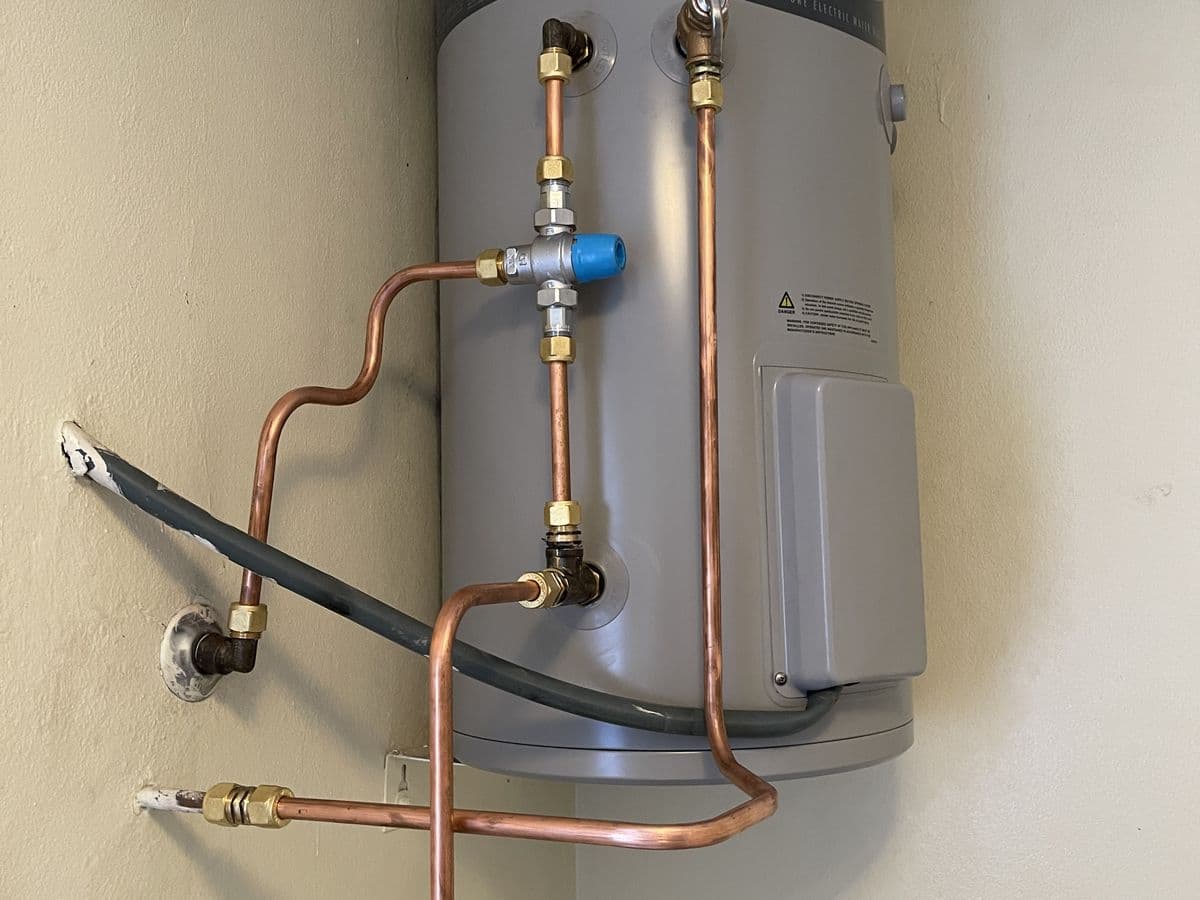
Tempering Valve Problems
A tempering valve sits between your hot water tank and the pipes running to your taps. Storage tanks hold water at 60°C to stop bacteria like Legionella from growing, but water at that temperature causes serious burns in under a second. The tempering valve blends in cold water so what actually reaches your bathroom taps stays capped around 50°C, which is a requirement under NSW hot water temperature regulations, not just a nice-to-have feature.
A failing tempering valve shows up as:
- Water that's lukewarm even with the thermostat turned up
- Temperature that swings between too hot and too cold without you touching anything
- Reduced pressure or flow at the hot tap
- Visible dripping or leaking from around the valve
Tempering valves aren't something to adjust yourself. NSW regulations require licensed plumbers to service and calibrate them, partly because getting it wrong either brings back the scalding risk the valve exists to prevent, or leaves you with water too cold to be useful.
Dux and Rheem Specific Issues
Two brands dominate Sydney rooftops and side passages, and each has its own habits as it ages.
Common Dux Complaints
Dux electric systems sometimes need a manual reset at the thermostat after a trip, and the reset button can be easy to miss if you're not familiar with the unit's layout. We get callouts for this more than you'd expect. Older Dux gas models are also more prone to pilot assembly wear after a decade or so on the job.
Common Rheem Complaints
Rheem systems are generally reliable, but tempering valve issues and element wear are the two most common calls we get for this brand, particularly on units eight years and older. Rheem producing water that's noticeably cooler than it used to be? A worn element or a tired tempering valve is usually where the problem sits.
What to Check Before Calling a Plumber
A short list of genuinely safe checks before you pick up the phone:
-
Check the switchboard — look for a tripped breaker labelled hot water.
-
Check the gas supply valve — make sure it's turned fully to the "on" position.
-
Look at the pilot light window — is the flame lit, out, or an odd colour? It should be blue, not yellow.
-
Think about usage — has everyone in the house showered back-to-back? You might have simply run the tank dry, not have a fault at all.
-
Check the age of your system — most storage systems last 8 to 12 years. If yours is older, a full failure rather than a single fault is more likely.
When to Call a Licensed Plumber
Some situations call for emergency plumbing rather than another DIY attempt, full stop:
- Any smell of gas, at any point
- A breaker that trips again as soon as you reset it
- Visible leaking from the tank or the tempering valve
- A system older than 10 to 12 years showing multiple symptoms at once
- No change after the basic checks above
Once a system is past the decade mark and throwing multiple faults, repair costs start closing in on replacement. It's worth pricing a heat pump upgrade alongside the repair quote before committing to either.
24/7 Local Plumbers is available around the clock with $0 call-out fees and a lifetime labour guarantee. If your hot water hasn't come back after these checks, call 1300 138 780 or book online for a free quote.
Key Takeaways
- Identify your system type first (gas, electric, or solar), since the likely causes are completely different.
- A lit pilot light doesn't guarantee hot water. Check for a faulty thermocouple if the flame's on but taps run cold.
- Never open an electrical panel on a hot water system yourself. Elements and thermostats are licensed electrician or plumber territory.
- Tempering valve issues show up as fluctuating or lukewarm water and legally require a licensed plumber to service.
- Dux and Rheem systems each have their own common failure points, usually tied to age rather than a specific design flaw.