What a Tempering Valve Does
Most people meet their tempering valve only when something goes wrong. The shower runs scalding for a second before settling. The bathroom basin never gets properly warm. Or a question comes up at sale or lease about whether the hot water complies.
It is a small brass fitting on the outlet side of your hot water system, and it does something genuinely important: it keeps the water arriving at your bathroom taps below the temperature at which it can scald.
This guide covers what the valve does, why delivered hot water is regulated, how the requirements sit in New South Wales and Victoria, how to spot a failing valve, and what testing and replacement involve.
Blending Hot Water Down
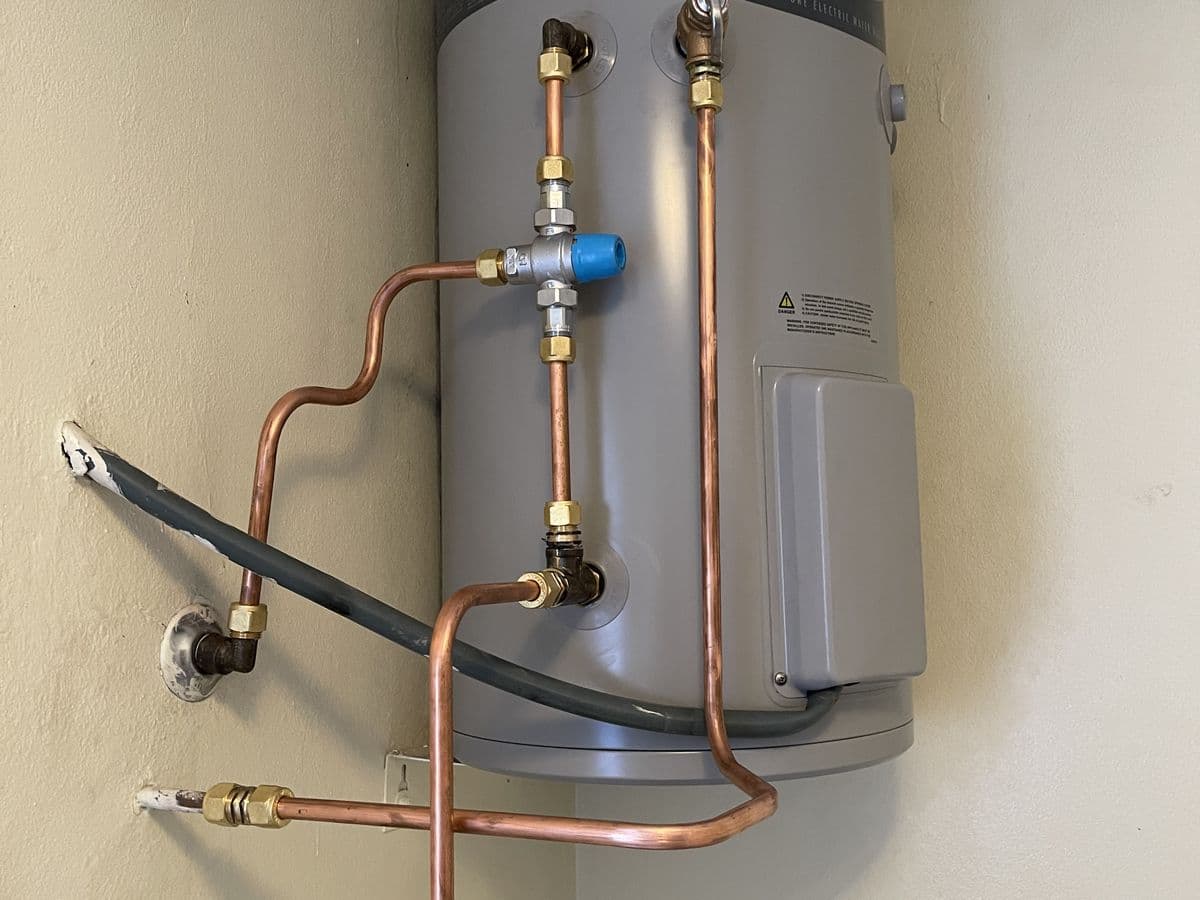
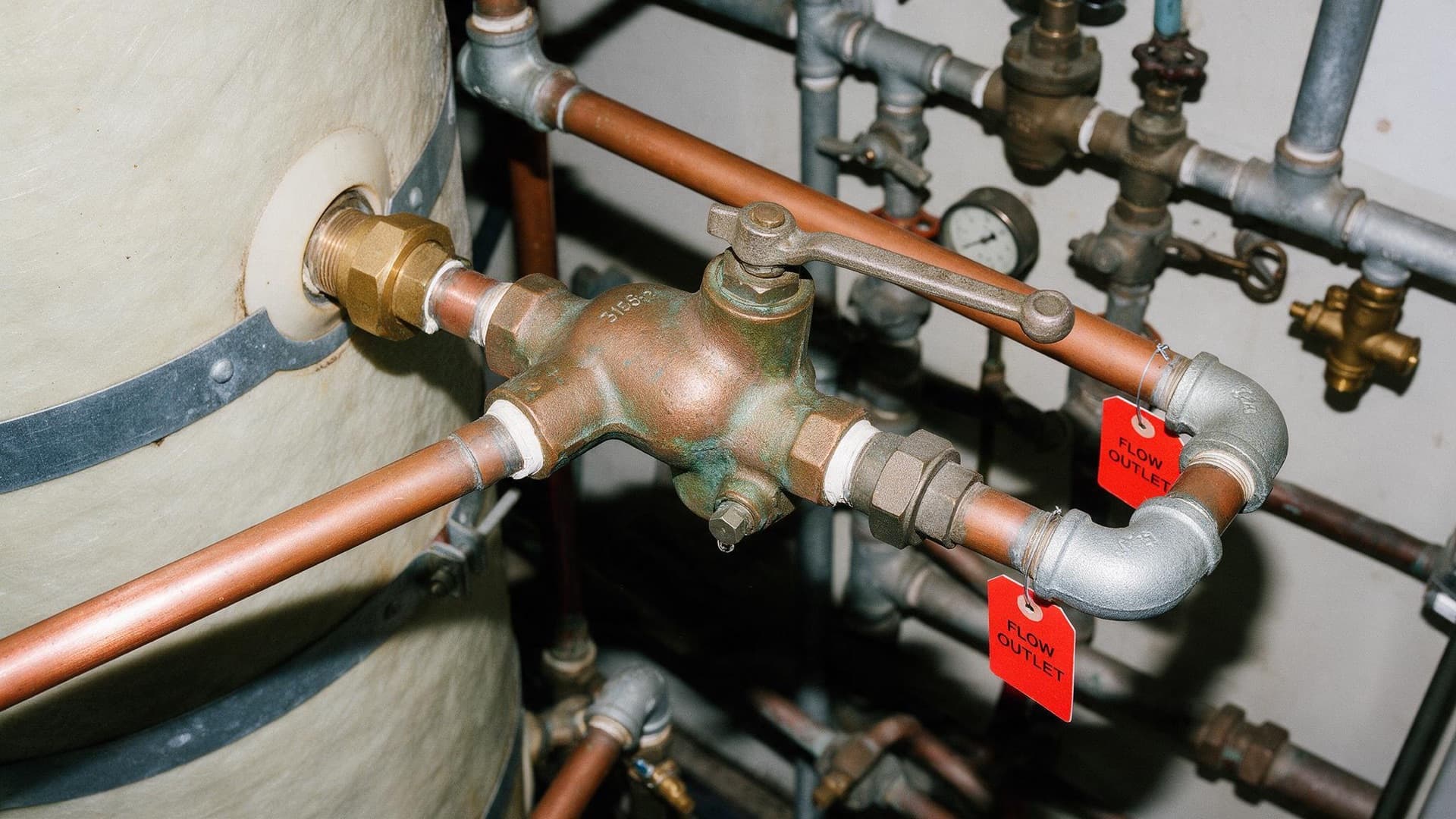
A tempering valve mixes stored hot water with cold water before it reaches your outlets, delivering a steadier and lower temperature than the cylinder holds. It is a mechanical device, not an electronic one, and it sits in the pipework rather than inside the heater.
Why Storage and Delivery Temperatures Differ on Purpose
This is the part that surprises people. Your system deliberately stores water hotter than you would ever want to touch, then cools it on the way out.
Water is stored hot to control the growth of bacteria such as Legionella, and guidance from the Australian Building Codes Board addresses this in its handbook on warm water systems. Storing hot and delivering cooler is how a single system manages both risks at once.
Where It Sits
The valve is usually within arm's reach of the cylinder, on the hot outlet, and forms part of the hot water system as a whole. On an instantaneous or continuous flow system the arrangement differs, and in some cases temperature is managed at the unit itself.
Why Delivered Hot Water Is Regulated
Scald injuries happen faster than most people expect. Guidance published by the Victorian Building Authority on hot water safety explains that the risk rises sharply with temperature: roughly five minutes of exposure at 50 degrees Celsius, compared with around five seconds at 60 degrees.
That gap is the reason the requirement exists, and why it has been in place since 1996. Young children, older people and anyone with reduced mobility or sensation are most at risk, because they are least able to move away quickly.
Caution
if you have young children or an elderly relative at home and your bathroom hot water feels uncomfortably hot, treat it as worth checking rather than something to get used to.
Requirements in NSW and Victoria
24/7 Local Plumbers is licensed in both states, so this question comes up from clients who own property in each. The underlying rules come from the same national framework, but the administering bodies differ.
The National Baseline
Australian plumbing requirements set a maximum delivery temperature at outlets used for personal hygiene, which the National Construction Code frames as baths, showers and basins. The relevant technical standards are AS/NZS 3500.4, covering heated water services, and AS 4032.3, covering the valves themselves.
Two figures matter:
- 50 degrees Celsius maximum at personal hygiene outlets in most homes
- 45 degrees Celsius maximum in premises used by children, older people or people with disability, such as early childhood centres, schools and aged care facilities
Where the lower figure applies, a thermostatic mixing valve is generally used rather than a standard tempering valve, because the tolerance required is tighter.
Kitchen sinks and laundry troughs are treated differently, as the temperature limits attach to personal hygiene fixtures.
New South Wales
NSW Fair Trading publishes guidance on the installation requirements of temperature control devices, which sets out when a device is required and what is acceptable. Plumbing work of this kind is licensed work in NSW, and a certificate of compliance is part of the process.
Victoria
The Victorian Building Authority publishes a specific technical guidance note, Plumbing HW 01, covering the installation of tempering valves and heat retention for hot water piping. Victorian plumbing work is administered through the VBA, and the practitioner registration and compliance certificate arrangements differ from the NSW system.
If You Own Property in Both States
The delivery temperature expectation is consistent. What differs is administration: who licenses the plumber, what compliance paperwork is issued, and who you approach with a question. Melbourne landlords should check the VBA guidance, and our Melbourne plumbers work to Victorian requirements under VIC Licence #126319.
Avoid: do not rely on a figure quoted in a forum or a product listing for your own property. Requirements vary with the type of premises and the age of the installation, and the state regulator is the authority worth checking.
| New South Wales | Victoria | |
|---|---|---|
| Max temperature at bath, shower, basin | 50°C (45°C in premises for vulnerable groups) | 50°C (45°C in premises for vulnerable groups) |
| Administering body | NSW Fair Trading | Victorian Building Authority |
| Key guidance | Installation requirements of temperature control devices | Plumbing HW 01 |
| Technical standards | AS/NZS 3500.4, AS 4032.3 | AS/NZS 3500.4, AS 4032.3 |
Signs Your Tempering Valve Is Failing
A failing valve usually shows up in one of three ways at the tap.
Scalding Water With No Change to the Thermostat
If the water suddenly runs hotter than it used to and nobody has touched the system, the valve may no longer be blending correctly.
Lukewarm Water No Matter the Setting
The opposite failure is just as common. If the valve sticks towards cold, no amount of turning the thermostat up will fix it, and turning the thermostat up is not the answer.
Temperature Swinging Mid-Shower
Water that alternates between hot and cool while nothing else in the house is running can indicate a valve that is no longer holding a stable blend.
What These Symptoms Rule In and Out
These signs overlap with thermostat and element faults, and with an undersized system. Temperature that varies when someone else turns on a tap is a different issue again. If the system is also slow to recover or running out sooner than it used to, our guide to hot water system faults covers the other likely causes.
Testing and Replacement
Testing, adjusting and replacing a tempering valve all sit with a licensed plumber.
Who Can Test and Adjust One
Adjusting or replacing a tempering valve is plumbing work, and in NSW it falls within the licensed work defined by Fair Trading. It is not a homeowner task, and the reason is practical as well as legal: setting a valve requires measuring delivered temperature properly, and getting it wrong risks either scalding or a system that no longer complies.
Service Life
Tempering valves do not last forever. Manufacturers specify a nominal service life and testing interval for their particular valve, and those specifications vary between products, so the figure that applies to your valve is the one in its documentation. Sydney's water conditions and the age of the system both play a part.
What Replacement Involves
Replacement is usually a straightforward job: isolate the system, drain the relevant section, swap the valve, then set and verify the delivered temperature at the outlets. It is generally done in a single visit. If your cylinder is also nearing the end of its life, it is worth reading how long hot water systems last before spending money on parts for an ageing unit.
When to Call a Licensed Plumber
Call a licensed plumber if the water at your basin or shower feels too hot, if it will not get warm regardless of the thermostat, if the temperature swings without explanation, or if you need compliance confirmed for a sale, a lease or an insurance question.
At 24/7 Local Plumbers we work across Sydney and Melbourne with a $0 call-out fee, upfront fixed pricing and a lifetime guarantee on workmanship. We cover tempering valve testing and replacement, and we are licensed in NSW (#379146C) and Victoria (#126319).
Give us a call on 1300 138 780 and we will tell you what is wrong and what it costs before we start.
Key Takeaways
- A tempering valve blends stored hot water down to a safe temperature before it reaches your taps.
- Water is stored hot to control bacteria and delivered cooler to prevent scalding.
- Australian requirements set 50 degrees Celsius at personal hygiene outlets in most homes, and 45 degrees in premises used by vulnerable groups.
- The technical standards are AS/NZS 3500.4 and AS 4032.3, applied through the National Construction Code.
- NSW is administered by Fair Trading and Victoria by the VBA, so the paperwork differs even though the temperature expectation does not.
- Scalding, lukewarm-only water and temperature swings are the common signs of a failing valve.
- Testing, adjustment and replacement are licensed plumbing work.