Is Your Low Water Pressure One Tap or the Whole House?
You turn the shower on full and get a drizzle. The kettle takes an age to fill. Low water pressure is the sort of problem people put up with for months, mostly because they're not sure whose job it is to fix.
And that's the real question. Low water pressure comes from one of two places: the supply coming into your property, or the plumbing inside it. One is Sydney Water's to sort out. The other is yours.
So which is it? A one-minute test at the garden tap will tell you. This guide walks you through that test, then the common causes, what you can fix yourself and when to bring in 24/7 Local Plumbers.
Start by walking around the house and turning on taps. Kitchen, bathroom, laundry, outside. The pattern narrows the cause down faster than anything else you can do.
One tap or one shower
If a single outlet is weak and the rest are fine, the problem is at that fixture. It's usually a clogged aerator or shower head, a worn tap cartridge or a kinked flexible hose under the basin.
Hot water only
If the cold runs strongly and the hot is weak, the supply is fine. The restriction is in or after the hot water system. There's a section on that below.
Every tap, hot and cold
If the whole house is down, the cause is at or before the point where water enters your home: the meter tap, a pressure limiting valve, a leak, or the supply in your street.
Also ask whether it happened suddenly or crept up over months. Sudden usually means a valve, a leak or a supply issue. Gradual usually means build-up in pipes and fittings.
How to Check Your Water Pressure at Home
You don't need a gauge to get a useful answer. Sydney Water publishes a simple flow test that uses your meter.
The one-minute meter test
Sydney Water aims to supply a minimum of 15 metres head of pressure at your connection, which it says equals a flow of 18 litres a minute at the garden tap. Here's Sydney Water's one-minute flow test:
- Turn off every tap and water-using appliance in the house.
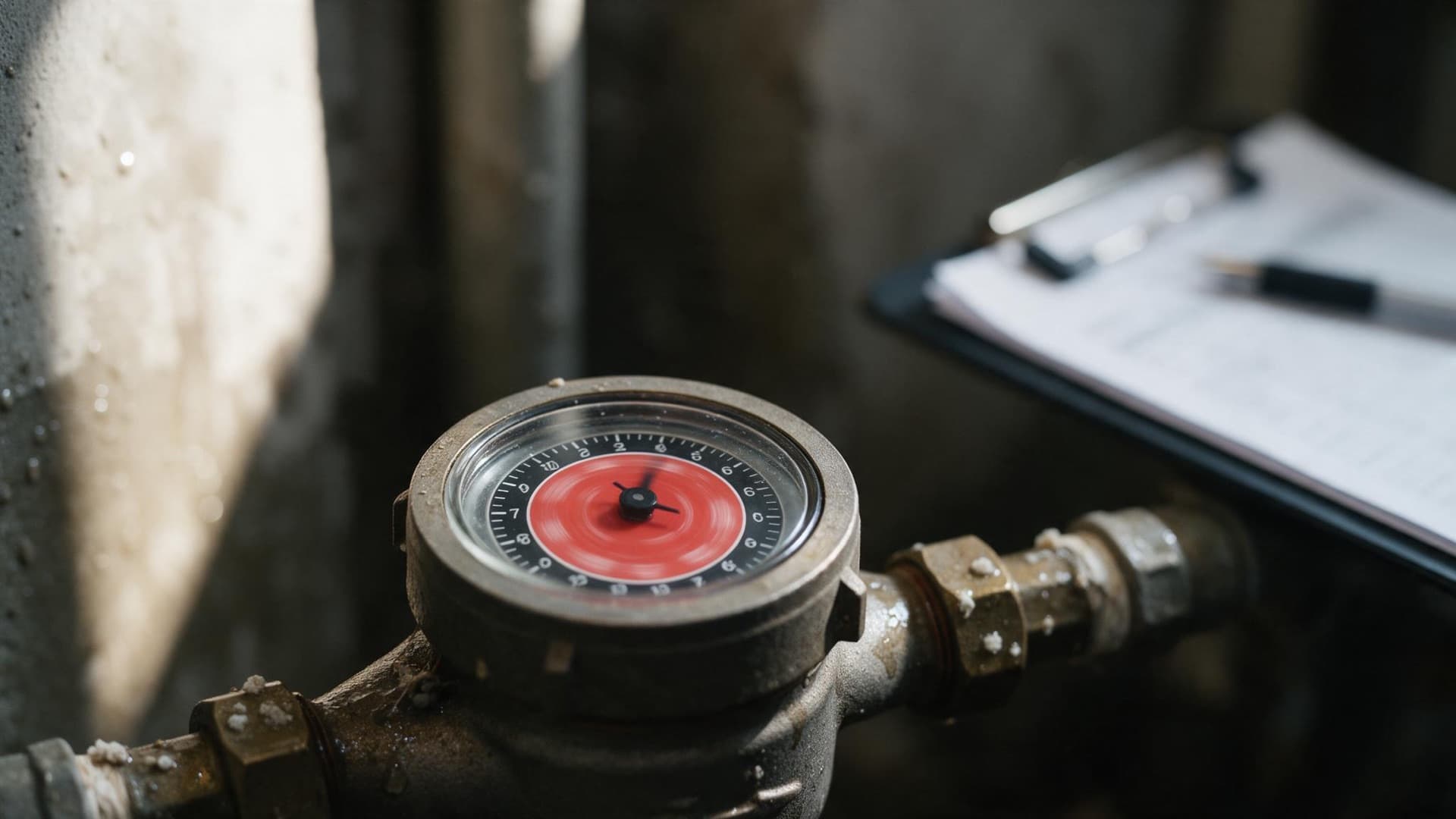
- Go to your water meter and write down the reading, including the red numbers.
- Turn your front garden tap on fully for exactly one minute.
- Take a second reading and subtract the first from it. That's the litres you used in a minute.
If you get 18 litres a minute or more, the supply is meeting the minimum and the cause is likely in your own plumbing. If you get less, Sydney Water asks you to call 13 20 90.
Check your taps are fully open
Before you call anyone, check the meter tap that controls flow into your property is fully open. Then check the isolation taps feeding your hot water system. It sounds too simple to be the answer. But a tap left half closed after a repair is a classic cause of low pressure across a whole house, and it costs nothing to rule out.
What Causes Low Water Pressure?
Once you know the pattern, these are the usual suspects.
Clogged aerators and shower heads
The small mesh screen on the end of a tap (the aerator) traps grit and mineral scale. So do the fine holes in a shower head. Over time, the flow drops. If only one outlet is weak, look here first. It's also the easiest fix on this list.
A partly closed or failing valve
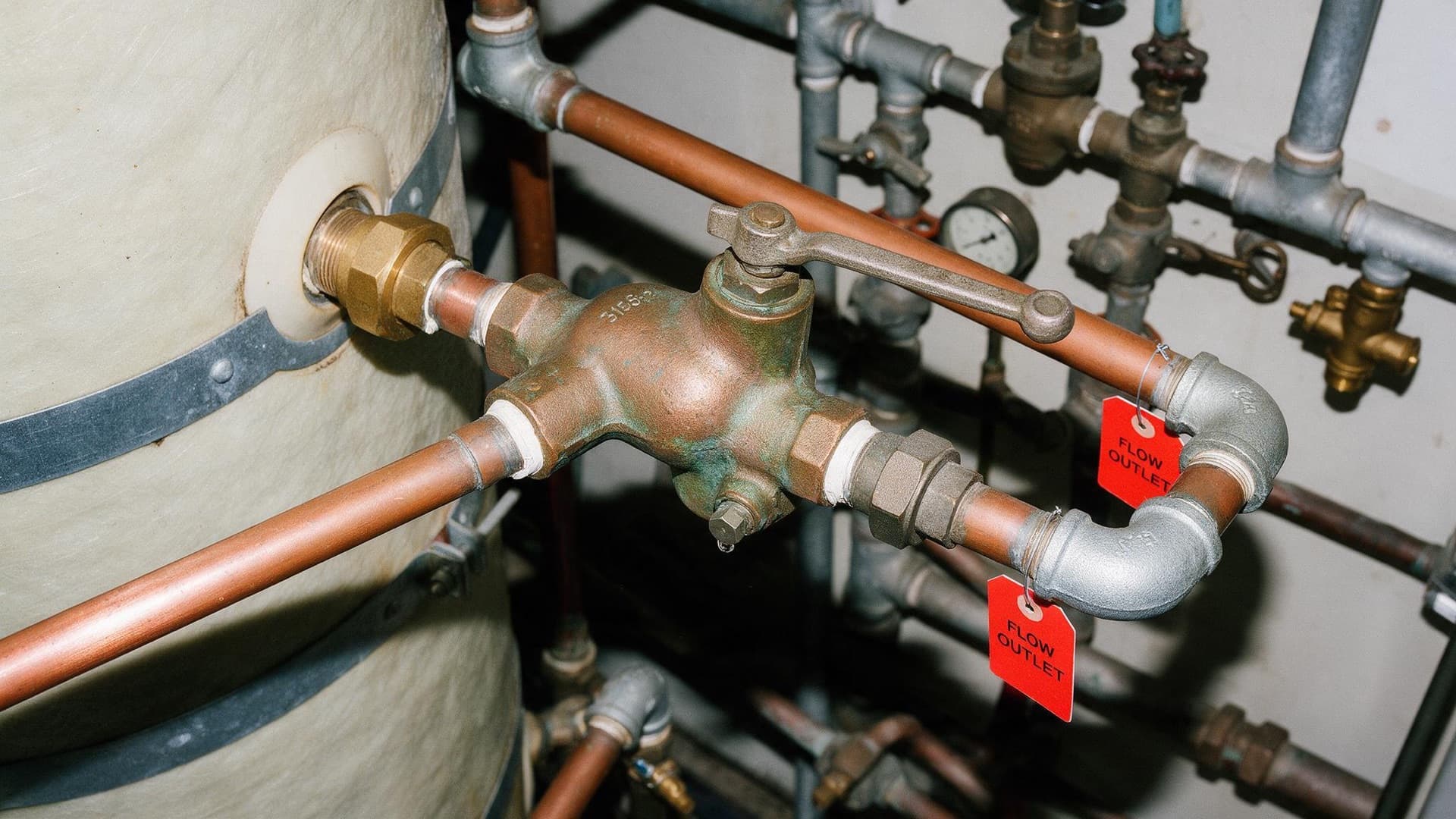
Isolation taps under sinks, the stop tap at the meter and the valves on your hot water system can all be left partly closed, or can fail inside so they no longer open fully.
A pressure limiting valve
Many homes have a pressure limiting valve near the meter to protect appliances and pipes from high mains pressure. These valves wear out. When one fails, pressure can drop across the whole house.
Old corroded pipes
Older Sydney homes with galvanised steel pipes often lose pressure gradually. The pipes rust from the inside, and the opening narrows a little more each year, until there's not much room left for water to get through. Cleaning doesn't fix this. The affected pipework needs replacing.
Supply issues in your street
A burst main, maintenance work or high demand on a hot evening can drop pressure for a whole street. If your neighbours have the same problem, it's almost certainly the supply.
| What you notice | Likely cause | Who fixes it |
|---|---|---|
| One tap or shower is weak | Clogged aerator, shower head or cartridge | You, or a plumber |
| Hot is weak, cold is fine | Hot water valve, tempering valve or sediment | Plumber |
| Whole house dropped suddenly | Closed valve, failed pressure limiting valve, leak | Plumber |
| Whole house weak for years | Corroded pipes | Plumber |
| Neighbours affected too | Mains supply | Sydney Water |
Low Hot Water Pressure in the Shower
Low hot water pressure in the shower, with the cold running normally, is its own problem with its own causes. The good news is that it rules out the mains.
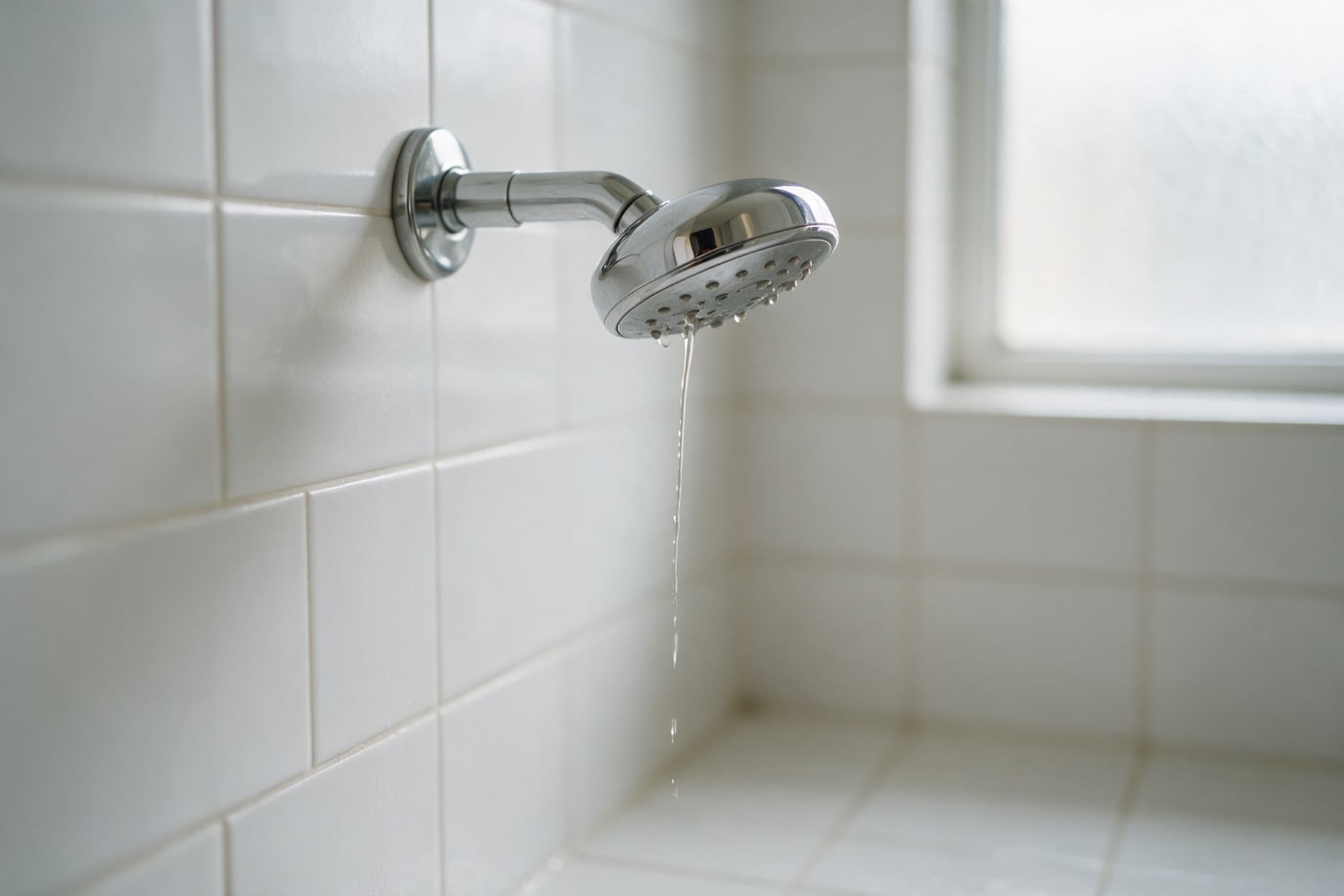
Hot water pressure low but cold fine
Check these in order:
- The shower head. Unscrew it and rinse the screen. Scale builds up faster on the hot side.
- The isolation valve on the hot water system. Make sure it's fully open.
- The age of the system. Sediment collects in the bottom of older storage tanks and can restrict the outlet.
Tempering valves
A tempering valve mixes hot and cold water so it reaches your bathroom at a safe temperature. When one becomes blocked with scale or starts to fail, hot water pressure drops at every bathroom outlet. Our article on what a tempering valve does explains how to spot one that's on the way out.
Tempering valves and hot water system valves aren't DIY parts. Our hot water plumbers can test and replace them.
How to Increase Water Pressure
How to increase water pressure depends on what's holding it back. Start with the free fixes.
What you can do yourself
- Unscrew and clean tap aerators and shower heads. Soak them in white vinegar for an hour to loosen scale.
- Open the meter tap and all isolation taps fully.
- Run the one-minute meter test so you know whether supply is the issue.
- Check your meter with everything off. If the dial is still turning, you may have a leak.
Tip
If your shower was fine until you fitted a new water-saving shower head, the head is doing what it was built to do. That's lower flow, not a pressure fault.
What needs a plumber
- Replacing a failed pressure limiting valve.
- Finding and repairing a hidden water leak.
- Replacing corroded pipework.
- Servicing or replacing tempering valves and hot water valves.
What about a pump? It can increase water pressure where supply is low, but it's not a first step. Fit one to a home with a leak or choked pipes and all you've done is hide the fault.
When to Call Sydney Water and When to Call a Licensed Plumber
Call Sydney Water on 13 20 90 if:
- Your garden tap delivers less than 18 litres a minute in the meter test.
- Your neighbours have low pressure too.
- You have no water at all.
Sydney Water says the average pressure across its network is 52 metres head, and its operating licence requires a minimum of 15 metres head at the connection to your property.
Call a licensed plumber if:
- The meter test passes but pressure inside the house is poor.
- Only the hot water is affected.
- Pressure dropped suddenly and your neighbours are fine.
- Your meter keeps turning with every tap off.
Need help from a licensed plumber? $0 call-out fee, available 24/7, Sydney-wide. Call 1300 138 780.
Key Takeaways
- Low water pressure is either a supply problem (Sydney Water) or a plumbing problem (yours). Work out which before spending money.
- Check whether it's one tap, hot water only or the whole house.
- Sydney Water's one-minute meter test: 18 litres a minute or more at the front garden tap means supply is meeting the minimum.
- Clean aerators and shower heads and open every valve fully before anything else.
- Hot water pressure low but cold fine points to the hot water system or tempering valve.
- Failed pressure limiting valves, leaks and corroded pipes need a licensed plumber.