What Is Backflow and Why Is It a Problem?
A letter arrives from Sydney Water. Your property needs a backflow prevention device installed and tested. You're not quite sure what backflow is, why your building is suddenly at risk, or what you're actually required to do.
That's a common situation. Backflow compliance catches a lot of property owners off guard, commercial and residential alike. The consequences of ignoring it (fines, supply restriction, disconnection) are real, and so is the underlying public health risk. It's worth understanding properly.
This guide explains what backflow is, which properties need prevention devices, what the different devices actually do, and what the testing obligations look like in NSW and Western Australia.
Backflow is the reversal of water flow. Instead of clean water moving from the mains into your property, contaminated water from your side flows back into the public drinking supply. It's a plumbing problem with public health consequences.
How Backflow Happens
There are two ways it occurs.
Back pressure happens when pressure on your property's side of the meter exceeds the incoming mains pressure. Pumped systems, elevated storage tanks, boilers, and pressurised equipment can all create this condition. Water gets pushed back against the supply.
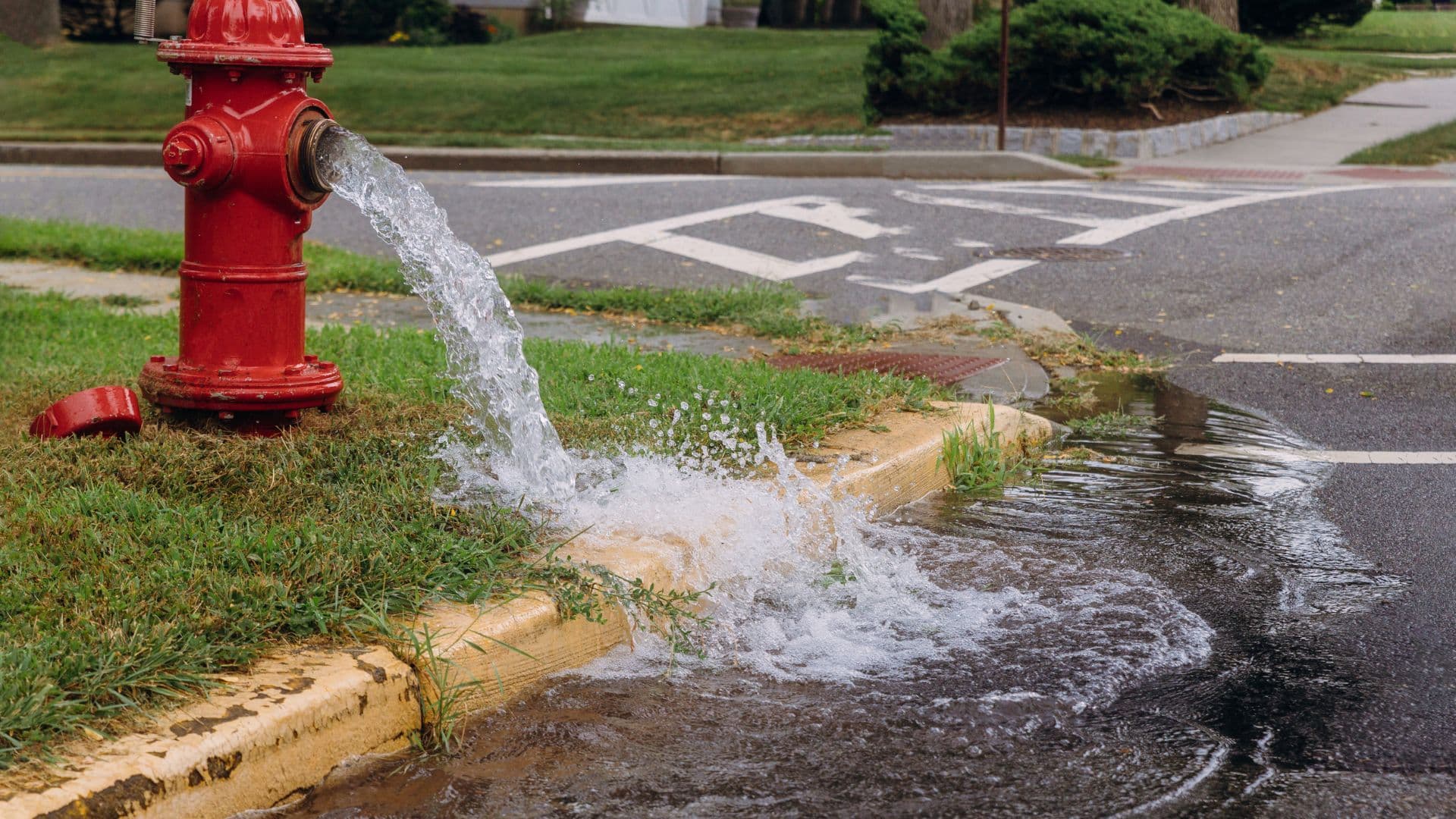
Back siphonage happens when mains pressure drops suddenly, creating a vacuum that pulls water backwards from your property into the supply line. A nearby fire hydrant being opened, a water main break, or a sudden surge in demand on the network can all drop pressure enough to cause it.
In a home with nothing unusual connected to the water supply, neither of these is much of a risk. On a commercial or industrial site, the picture changes completely.
What Contaminants Can Enter the Drinking Supply
The hazard depends entirely on what your property's water comes into contact with. On commercial and industrial sites, the potential contaminants include:
- Fertilisers and pesticides from irrigation systems
- Chemicals from industrial processes or cleaning equipment
- Bacteria from cooling towers, medical equipment, or food processing
- Grey water or sewage from cross-connected plumbing
- Pool chemicals from direct mains fill lines
One backflow event involving any of these can contaminate drinking water across a street, a block, or a whole district. Not just the affected property. That's why water authorities treat water quality issues at the mains as public health matters, not maintenance issues.
Real-World Risks
Backflow contamination incidents are not theoretical edge cases. They have caused illness outbreaks, triggered large-scale supply shutdowns, and exposed property owners to significant legal liability. The severity of the risk is tied directly to what's on your site, which is why the compliance system is built around a hazard rating rather than a one-size-fits-all rule.
Which Properties Need a Backflow Prevention Device?
Whether you need a device, and which type, comes down to your property's hazard rating. Water authorities classify properties as low, medium, or high hazard based on how they use water and what it's exposed to.
Low Hazard Properties
Standard residential homes with nothing unusual connected are typically low hazard. A NSW property with a 20mm or 25mm water meter generally doesn't need additional backflow containment beyond what's already built into standard fittings. That said, specific connections (like a below-ground rainwater tank) may still require a non-testable device such as a dual check valve.
Medium Hazard Properties
Medium hazard covers commercial buildings, irrigation systems on mains water, fire sprinkler systems, multi-residential buildings with shared services, and properties with rainwater tanks connected to potable supply. Properties with subsurface drainage systems like French drains connected to mains water may also fall into this category. These properties require testable backflow prevention devices, typically a double check valve assembly installed at the property boundary.
High Hazard Properties
Hospitals, laboratories, industrial facilities, car washes, chemical plants, food processing sites, and any property where water contacts toxic or biologically hazardous substances. These require an RPZ (Reduced Pressure Zone) valve: the highest level of mechanical protection. Our drainage services team assesses site-specific hazard ratings as part of any backflow consultation.
Does a Residential Property Need One?
Most homes don't. But a residential property can move into medium or high hazard territory if it has:
- An irrigation system connected to mains water
- A swimming pool or spa with a direct mains fill line
- A rainwater tank plumbed into the drinking water supply
- A bore or alternative water source connected to the property
If any of those apply, a testable backflow device may be legally required regardless of the property type.
Types of Backflow Prevention Devices
Getting the device right matters as much as having one. Using a lower-rated device on a higher hazard site is a compliance failure even if the device itself is working perfectly.
Air Gap
The simplest and most reliable form of backflow prevention. An air gap is just a physical separation between the water supply outlet and the flood level of any receiving vessel. A tap positioned above the rim of a sink is a good example. No contaminated water can travel backwards through empty air. No maintenance. No mechanical failure. The limitation is practicality: many commercial applications need a direct water connection, and an air gap can't provide that.
Double Check Valve (DCV)
Two independent spring-loaded check valves in series. Water can only flow one way through each, and if one check valve fails, the second still holds. DCVs are the standard device for medium hazard sites and are widely used on commercial properties, irrigation systems, and fire services. They're compact, can go above or below ground, and need annual testing to confirm the check valves are sealing correctly.
One thing to know: a DCV doesn't discharge water when it fails. Failure is silent. That's why annual testing isn't optional. It's the only way to know the device is still working.
Reduced Pressure Zone Device (RPZ)
An RPZ contains two check valves plus a pressure relief valve sitting between them, actively monitoring the pressure differential. If either check valve starts to fail, or if supply pressure drops to a dangerous level, the relief valve opens and dumps water to a drain, creating an air gap in real time. It's a self-correcting mechanism, which makes it the right device for high hazard sites where a passive system isn't enough. RPZ devices must be installed above ground with drainage clearance and tested annually by an accredited backflow plumber.
Device Comparison
| Device | Hazard Rating | Testable | Installation | Best For |
|---|---|---|---|---|
| Air gap | Low to medium | No | Any accessible outlet | Simple fixtures, tanks |
| Dual check valve | Low | No | In-line | Garden taps, low-risk residential |
| Double check valve (DCV) | Medium | Yes | Above or below ground | Commercial, irrigation, fire services |
| RPZ valve | High | Yes | Above ground only | Industrial, medical, chemical sites |
Backflow Testing and Compliance in NSW
Sydney Water Requirements
In NSW, backflow prevention is governed by the Plumbing Code of Australia and AS/NZS 3500. Sydney Water keeps a register of all installed testable devices and enforces compliance across its network. As outlined on Sydney Water's backflow prevention page, property owners are responsible for installing the correct device for their hazard rating, having it commissioned at installation, and arranging annual testing every 12 months from that point.
Annual Testing Obligations
After each test, the accredited plumber lodges a compliance report directly with Sydney Water through their online portal. Sydney Water audits a sample of lodgements and will issue a defect notice if a device fails to meet AS/NZS 3500 and AS/NZS 2845 standards. If an audit defect notice isn't rectified, Sydney Water can restrict or disconnect the water supply. The reminder letters come from Sydney Water, but compliance is the property owner's legal responsibility, not the water authority's.
Who Can Perform the Test
Only licensed plumbers with specific backflow containment accreditation from a registered training organisation can perform backflow testing in NSW. A general plumbing licence doesn't cover it. The tester must be on Sydney Water's accredited list, and results must be lodged by that plumber directly. They can't be passed to the property owner to submit themselves.
Backflow Testing and Compliance in Perth
Water Corporation Requirements
In WA, backflow prevention falls under the Plumbers Licensing and Plumbing Standards Regulations, with the Water Corporation setting requirements for properties on its network. As set out in the Water Corporation's device installation guidelines, all testable backflow devices must be inspected and certified by a licensed, accredited plumber every 12 months. Devices must be registered with the Water Corporation, and test results submitted in line with their reporting process.
Penalties for Non-Compliance
Non-compliance in WA carries penalties of up to $5,000 per breach, plus daily fines for continued non-compliance. The Water Corporation can serve a legal order requiring installation or rectification, and can restrict or disconnect water supply until compliance is restored. For businesses in regulated industries (food service, healthcare, hospitality), non-compliance with backflow requirements can also draw scrutiny from health and safety regulators, separate from anything the Water Corporation does.
When to Call a Licensed Backflow Plumber
Call a licensed backflow plumber if:
- You've received a compliance notice from Sydney Water or the Water Corporation
- Your property has an irrigation system, pool, fire service, or rainwater tank on mains water
- You're not certain of your current hazard rating
- Your annual test is overdue or the device hasn't been tested since it was installed
- A test came back as a fail and the device needs repair or replacement
- You're developing or renovating a commercial property and need a backflow assessment before sign-off
One thing worth knowing: backflow work is not the same as general plumbing — it's different from fixing a blocked drain or replacing a tap. Installation and testing must be done by a plumber with specific backflow accreditation. Hiring an unaccredited plumber means the test result can't be lodged with the water authority. The property remains non-compliant even if the work itself was carried out correctly.
247 Local Plumbers holds backflow containment accreditation and works with commercial and residential properties across Sydney. We install, test, and certify all device types and lodge results directly with Sydney Water. $0 call-out fee, upfront fixed pricing, no surprises. Call 1300 138 780 or book online.
For urgent compliance issues or properties with a water supply restriction notice, our emergency plumbing service runs 24 hours a day, 7 days a week.
Wrapping Up
Backflow prevention is a public health obligation. The compliance framework exists because a single incident on the wrong site can contaminate drinking water for an entire neighbourhood. The consequences of ignoring it run from fines and disconnection to genuine legal liability if contamination occurs on your property.
If you've had a notice, have a site that qualifies for a device, or simply aren't sure where you stand, the fastest resolution is a conversation with an accredited backflow plumber. At 247 Local Plumbers, we handle the whole process (assessment, installation, testing, and lodgement) with $0 call-out fee and no surprises on the bill. Call 1300 138 780 and we'll work out what your site needs.