What Is a French Drain?
Every time it rains, the back corner of your yard turns into a swamp. The grass near the fence stays soggy for days. Water sits against the house wall and you're not sure if it's getting into the subfloor or not.
If that sounds familiar, a French drain is probably the fix you're looking for. It's one of the most effective and low-profile drainage solutions for residential properties, and it's been solving exactly this kind of problem for over 150 years.
This guide explains what a French drain is, how it works, when you actually need one, how to install it, and what it costs in Australia, so you can decide whether it's a weekend DIY project or a job for a licensed drainage specialist.
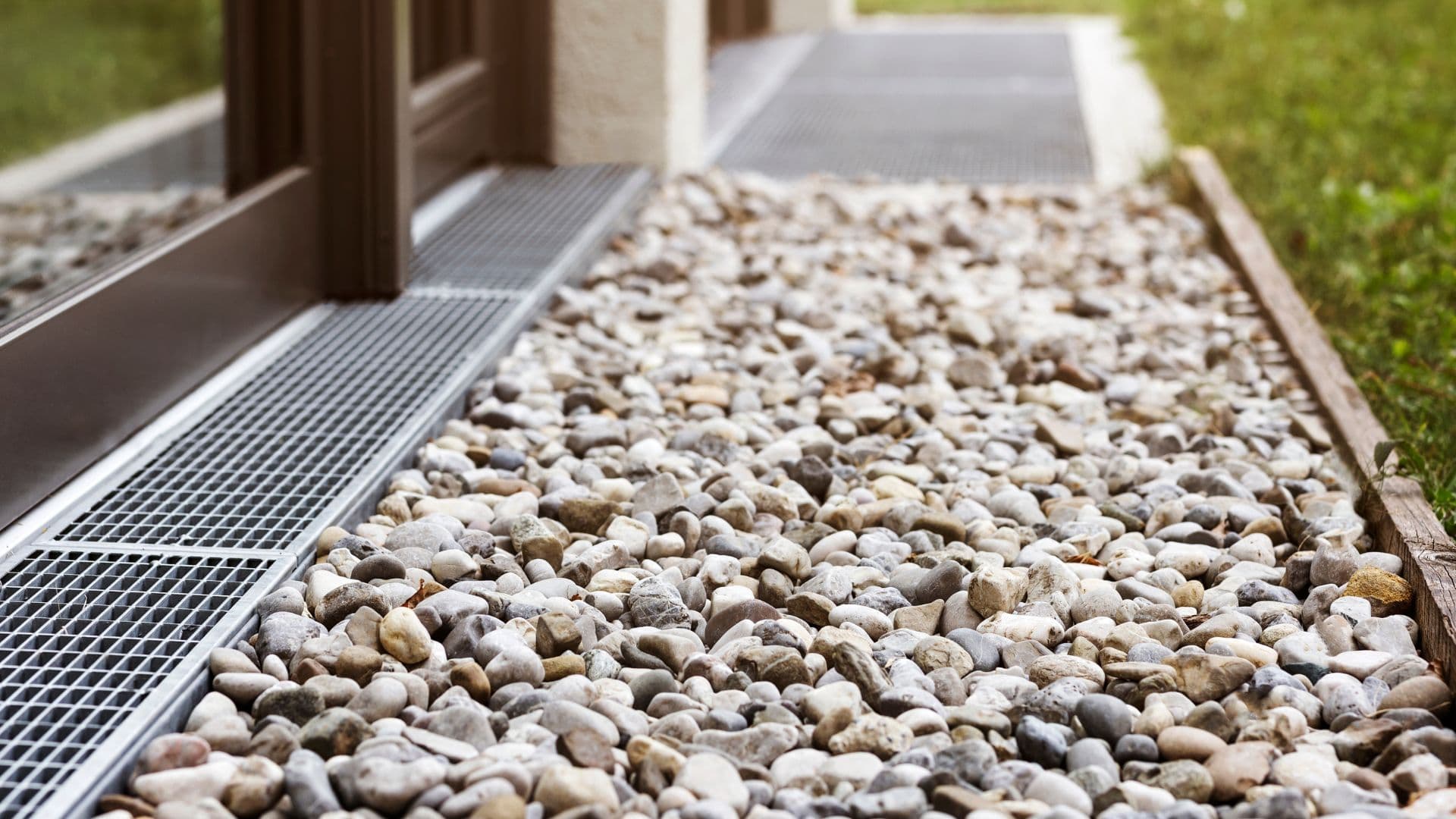
A French drain is a gravel-filled trench containing a perforated pipe that collects groundwater and surface water and redirects it away from a problem area. It sits underground, is mostly invisible once finished, and handles subsurface water that standard surface drains can't touch.
The idea is simple. Water follows the path of least resistance. A French drain creates an underground channel that gives water somewhere to go other than pooling in your yard or sitting against your foundation. The gravel allows water to flow freely into the pipe, the pipe carries it away on a slope, and it exits at a safe discharge point: a stormwater drain, a dry well, or a lower section of the property. Our drainage solutions cover French drains alongside other drainage systems, and the right system depends on where your water problem is coming from.
How Does a French Drain Work?
The Four Components
Every French drain has the same four elements:
-
The trench — typically 150–300mm wide and 450–600mm deep for a standard yard application, though deeper for foundation drainage
-
Landscape fabric — lines the trench to prevent soil particles from migrating into the gravel and blocking the pipe over time
-
Gravel or crushed rock — surrounds the pipe and allows water to flow freely from the surrounding soil
-
Perforated pipe — a PVC pipe with holes that collects the water and carries it away at a consistent slope
The Role of Slope and Gravity
This is where most DIY French drains fail. The pipe needs a continuous downward slope of at least 1% (that's 10mm of drop for every metre of pipe run) from start to finish. Water won't flow uphill, and any flat or low spots will collect debris rather than move it along. Getting the slope right requires checking with a spirit level or laser level as you dig.
Avoid: Never direct French drain discharge toward a neighbour's property, into a sewer line, or anywhere that could cause pooling near another structure. Most Australian councils require stormwater to be managed on your own property or discharged to an approved point.
When Do You Need a French Drain?
Soggy or Waterlogged Yard
If a section of your yard stays wet for days after rain, or the grass in one corner is always struggling while the rest is fine, the soil isn't draining properly. Clay soils are particularly common in Sydney's western suburbs and Hills District and hold water far longer than sandy soils. A French drain intercepts the water before it saturates the ground and redirects it away.
Water Pooling Near the Foundation
Water sitting against your home's foundation is a serious long-term problem. It puts hydrostatic pressure on footings, finds its way into subfloor spaces, and causes structural moisture issues that can lead to water leak damage. A perimeter French drain intercepts groundwater before it reaches the building. If you're already seeing signs of moisture inside, it's worth investigating your drain system before deciding on the fix.
Retaining Wall Drainage
Retaining walls need drainage behind them. Without it, water saturates the retained soil, builds hydrostatic pressure, and pushes against the wall until it bows, cracks, or fails. A French drain installed directly behind a retaining wall gives that water a path to escape.
Water Entering a Basement or Subfloor
Interior French drains collect water that has already entered through basement walls and direct it to a sump pump for removal. This is specialist work and almost always requires a licensed plumber or drainage contractor.
How to Build a French Drain
A straightforward yard French drain is within reach for a capable DIYer. Here's what's involved.
What you need: spade and mattock (or a trenching machine for longer runs), laser or spirit level, geotextile landscape fabric, 20mm crushed drainage gravel, slotted PVC agricultural pipe (65mm or 100mm diameter), end cap and outlet fitting.
Step-by-Step Installation
- Plan the route. Mark the trench path from the problem area to the discharge point. The entire run must slope downward, so check the natural grade of your yard first.
- Check for underground services. Before you put a spade in the ground, lodge a free enquiry with Before You Dig Australia to get plans showing any buried pipes or cables. Hitting a gas line is dangerous and expensive. This step is non-negotiable.
- Dig the trench. For a standard yard application, dig 450–600mm deep and 200–300mm wide. Check the slope as you go, aiming for at least 1% fall along the entire length.
- Line with landscape fabric. Lay fabric into the trench with enough overhang to fold back over the top later. This prevents silt from clogging the gravel over time.
- Add a gravel base. Pour 50–75mm of crushed rock into the bottom of the trench.
- Lay the pipe. Place the perforated pipe on the gravel with holes facing down. Counterintuitive but correct. Water rises through the gravel and enters from below, which slows silting. Connect to your outlet at the lower end.
- Backfill with gravel. Cover the pipe with gravel to within 100mm of the surface.
- Wrap and cover. Fold the landscape fabric over the gravel, then fill the remaining space with soil, turf, or decorative stone.
Tip
For runs longer than 10 metres, hire a trenching machine from Kennards or Coates. It'll halve the time and save your back considerably.
French Drain Cost in Australia
DIY materials run roughly $30–$60 per metre, covering pipe, gravel, and landscape fabric. A 15-metre drain in an average Sydney backyard costs $450–$900 in materials, plus $200–$400 if you need a trenching machine.
Professional installation typically runs $1,500–$5,000 for a standard residential project in Sydney, depending on drain length, soil conditions, access, and discharge point. Complex installs near foundations or in tight spaces will sit at the higher end.
| Factor | Impact on Cost |
|---|---|
| Drain length | Longer runs mean more materials and labour |
| Soil type | Clay soils take longer to excavate |
| Depth required | Foundation drainage is deeper and more labour-intensive |
| Access | Tight side passages or existing landscaping add time |
| Discharge point | Connecting to a stormwater pit or kerb outlet adds cost |
DIY vs Professional Installation
A straightforward yard French drain, away from structures, with a clear discharge point and accessible ground, is a genuine DIY project. You need time, reasonable fitness, and patience to get the slope right. Materials are available at Bunnings or any landscape supply yard.
Some situations require a licensed plumber:
-
Foundation or subfloor drainage — incorrect installation can direct water toward the building rather than away from it
-
Any stormwater connection — in NSW, connections to the stormwater system must be made by a licensed plumber
-
Basement or interior French drains — typically involve sump pumps and licensed electrical work
-
Suspected pipe damage nearby — get a CCTV drain inspection before digging near cracked or misaligned underground pipes
As NSW Fair Trading advises, drainage work connecting to the stormwater or sewer system must be carried out by a licensed plumber. If you're unsure whether your project crosses that line, a quick consultation before you start digging is worth it.
247 Local Plumbers provides drainage assessments and French drain installation across Sydney with $0 call-out fee and upfront fixed pricing. Call 1300 138 780 or book online.
French Drain Maintenance
A well-built French drain is largely self-maintaining. Keep the inlet area clear of leaf litter and sediment, check the outlet is flowing freely after heavy rain, and clear any grate or cap regularly. If the problem area becomes soggy again or the outlet stops flowing during rain, the gravel or pipe has likely silted up. A licensed drainage plumber in Sydney can flush the pipe to restore flow without excavating the system.
Wrapping Up
A French drain is one of the most practical, durable fixes for a waterlogged yard, a wet foundation, or a retaining wall under pressure. Simple installs are genuinely achievable as a DIY project. When the problem is near a building or involves stormwater connections, professional installation is the right call.
At 247 Local Plumbers, we assess drainage problems and install French drain systems across Sydney, with $0 call-out fee and upfront pricing before any work starts. Call 1300 138 780 and we'll have a licensed plumber take a look.