What Is a Flexi Hose (and Where Are Yours)?
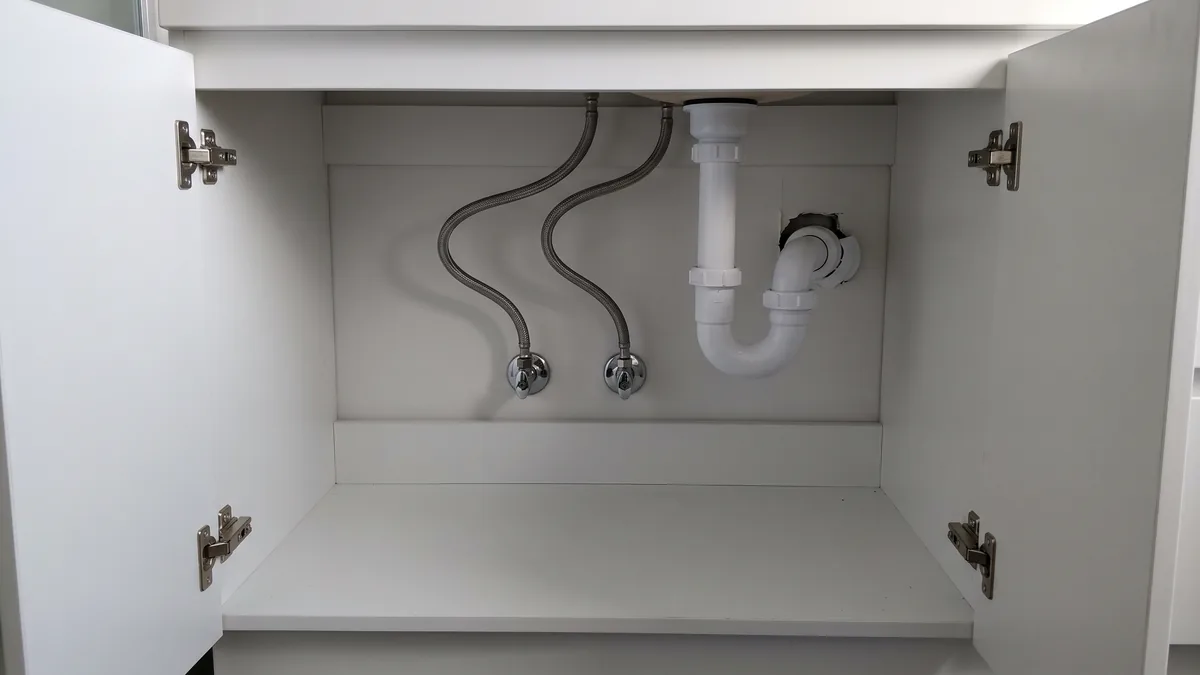
Open the cupboard under your kitchen sink and you'll probably see two silver hoses about as thick as a finger, running from the wall to the tap. They're holding back full mains pressure, every hour of every day. When a flexi hose bursts, the water doesn't stop on its own. It keeps going until somebody turns it off.
Most of us never give them a second look. This guide changes that: why they fail, the warning signs, how to check every hose in the house in about five minutes, and who's allowed to replace them in NSW and Victoria. It's from the licensed plumbers at 24/7 Local Plumbers, covering Sydney and Melbourne.
The flexible pipe under your sink
A flexi hose (you'll also hear braided hose or braided connector) is a rubber hose inside a woven stainless steel sleeve, with a threaded fitting on each end. It joins a tap, toilet or appliance to the fixed water pipe in the wall. So if you've ever wondered what the flexible pipe under the sink is called, that's the one.
The rubber carries the water. The braid stops the rubber ballooning under pressure. Once the braid weakens, the rubber is on its own, and it won't hold for long.
Where you'll find them
There are usually more of these in a house than people expect:
- Under the kitchen sink, feeding the mixer (normally a pair)
- Under each bathroom vanity, again usually a pair
- Behind each toilet, feeding the cistern
- Behind the dishwasher and the washing machine
- Behind the fridge, if it's plumbed in for ice or chilled water
- Sometimes on laundry tubs and outdoor connections
Why Braided Hoses Fail
Corrosion of the braid
Stainless steel sounds bulletproof. It isn't. A slow weep at one of the end fittings can leave deposits on the braid that eat into it over time, and the fumes from cleaning products stored in the same cupboard can do the same. Once enough strands break, the rubber pushes through the gap and splits.
Kinks, twists and stretching
A hose that's bent too tightly, twisted when it was fitted, or stretched to reach a fitting that's a bit too far away is under strain all the time. That strain sits in one spot. And that spot is where it usually lets go.
Over-tightening and poor installation
The fittings only need to be firm. Crank them too hard and you can crack the fitting or damage the seal. A cheap hose, the wrong hose for the fixture, or one put in without much care is far more likely to fail early.
Age, heat and water pressure
Rubber hardens with age, and faster on the hot side. High mains pressure adds stress, and so does water hammer (that bang in the pipes when a tap snaps shut), because every sudden stop jolts the hose. Our guide to water hammer causes and fixes explains how the two are linked.
Warning Signs Before a Flexi Hose Bursts
Hoses often give you some warning first. Look for:
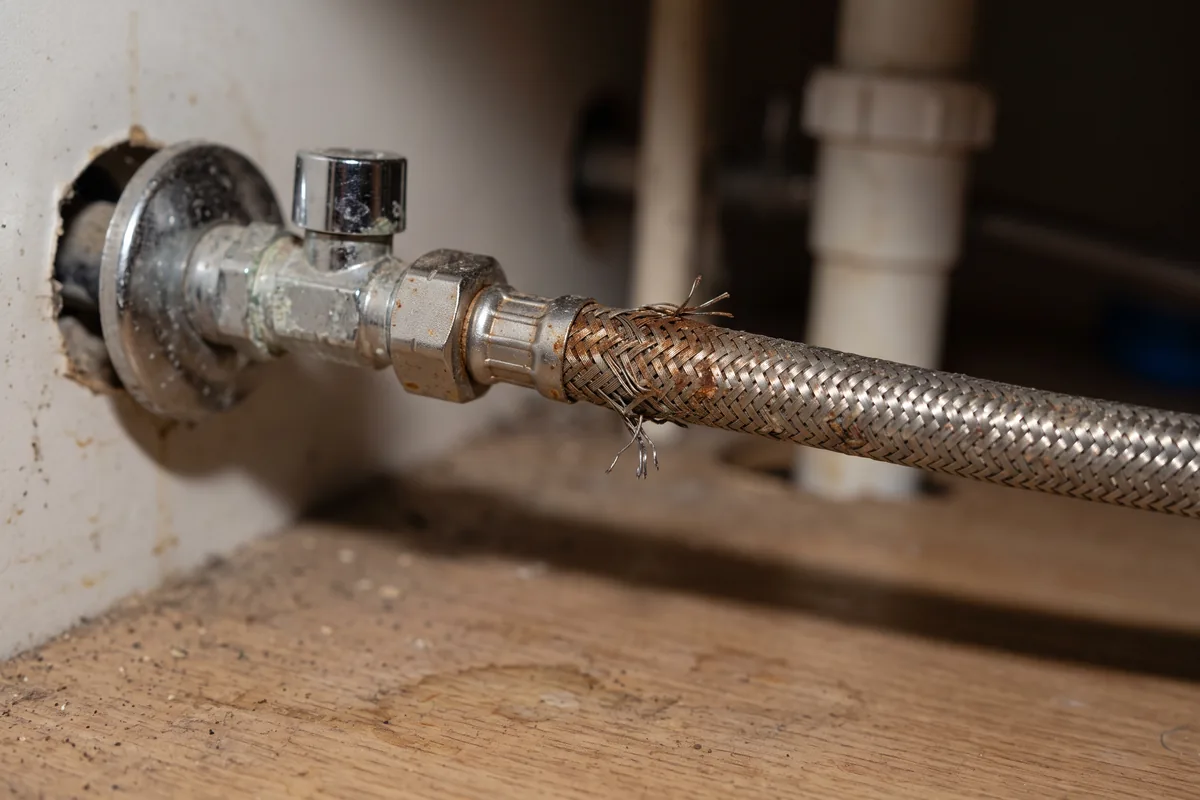
- Rust or brown spots on the braid, which means the steel is corroding
- Frayed or snapped strands poking out of the sleeve
- Bulges or lumps where the rubber is forcing its way through
- Kinks or tight bends, particularly near the fittings
- Moisture, drips or a white crust at either end
- Water marks or swelling on the cupboard floor underneath
- An old date stamped on the metal collar, if yours has one
That slow drip at a fitting is easy to shrug off. Don't. It's often how the corrosion starts. If you've also noticed damp cupboards or a water bill creeping up, our guide to the signs of a hidden water leak is worth a read.
A Five-Minute Check, Room by Room
No tools needed. Grab a torch, open each cupboard and have a look. Don't pull, twist or tighten anything. You're only looking.
| Room | Where to look | What to look for |
|---|---|---|
| Kitchen | Under the sink, behind the dishwasher | Rust spots, bulges, a damp cupboard floor, hoses squashed against the back wall |
| Bathroom | Under each vanity | Fraying, drips at the fittings, cleaning products packed in against the hoses |
| Toilet | Behind the cistern | Kinks, corrosion near the floor, a hose stretched tight to reach |
| Laundry | Behind the washing machine and tub | Twisted hoses, a wet floor, hoses crushed when the machine was pushed back |
| Fridge | Behind the fridge (if plumbed in) | A kinked or flattened line, water on the floor |
While you're down there, check that each hose has its own little isolation valve (a mini-stop tap) at the wall. The plumbing standard calls for one ahead of each flexi hose to a tap or cistern, so you can shut off one fixture without turning off the whole house. No valve? Mention it to your plumber.
Tip
Move cleaning products away from the hoses, or keep them in a sealed tub. It costs nothing and takes away a common cause of corroded braid.
How Long Do Flexi Hoses Last?
There's no single expiry date
There is no single replacement interval suitable for every flexi hose. Follow the manufacturer's instructions and replace the hose sooner if it shows corrosion, fraying, bulging, kinks or leakage.
You'll often see five to ten years quoted as general industry guidance, and that's all it is. It varies with the product, how the hose was installed, your water conditions and what the manufacturer says, and it's no promise that a hose will make it that far. If there's a date stamped on the collar, that's a handy starting point.
Why some fail early
Some don't last a year. Poor installation, the wrong hose for the job, chemicals in the cupboard and high water pressure can all cut a hose's life well short. Age is a guide. It isn't a guarantee.
Who Can Replace One in NSW and Victoria?
It's licensed plumbing work in both states
Swapping a flexi hose looks like a simple unscrew-and-screw job, and it's tempting to do it yourself. But it's water plumbing work, and in both NSW and Victoria it needs a licensed plumber.
That's not just red tape, either. Plenty of hose failures trace back to how the hose was fitted: twisted, stretched, over-tightened, or simply the wrong hose for the job.
The hose must be WaterMark certified
Flexible hose assemblies are on the national list of products that need WaterMark certification before a licensed plumber can install them. You can still buy uncertified hoses online and in some shops, but a licensed plumber isn't allowed to fit one.
What to ask your plumber
- Is the new hose WaterMark certified, and does it suit this fixture?
- Is there an isolation valve, and does it actually work?
- Is the hose the right length, so it's not stretched or kinked?
- While you're here, can you check the others?
If a Flexi Hose Bursts
A burst hose can pour out water non-stop at full mains pressure. If nobody's home, it keeps running into the cabinets, the floor and the walls, and in an apartment, into the ceiling of the unit below. The faster it's off, the less damage there is.
Turn the water off
Turn off the isolation valve on that hose if there is one and you can reach it safely. If there isn't, turn off the main water tap, usually at the meter near the front boundary.
Stay clear of power
If water has reached power points, appliances or the floor around them, don't touch them. Keep out of the wet area and get help.
Call a plumber
Once the water's off, call a licensed plumber to replace the hose and check the rest. Our water leak repair service runs 24 hours a day.
When to Call a Licensed Plumber
Call a plumber if any hose shows rust, fraying, bulges or drips, if a hose doesn't have an isolation valve, or if your hoses are getting on and have never been looked at.
The NSW Building Commission is clear that plumbing work needs a licence however small the job, and Victoria also requires a licensed plumber. One visit is usually enough to replace the tired hoses, fit isolation valves where they're missing and make sure nothing is kinked or stretched.
Worried about your flexi hoses? No call-out fee when you proceed with the repair, licensed plumbers available 24/7 across Sydney and Melbourne. Call 1300 138 780.
Final Word
A flexi hose burst is one of the more preventable leaks in a home. Know where your hoses are, have a look at them a couple of times a year, keep the chemicals away from them and replace any that show warning signs. Leave the replacing to a licensed plumber, with a WaterMark-certified hose and a working isolation valve.
Want every hose in the house checked in one visit? Call 1300 138 780. A licensed plumber will look over each connection, replace any that are past their best and fit missing isolation valves, at an upfront fixed price. There's no call-out fee when you proceed with the repair.
Key Takeaways
- Flexi hoses sit under full mains pressure in most cupboards in your home.
- Corrosion, kinks, over-tightening, age and high pressure are the usual causes of a flexi hose burst.
- Rust, fraying, bulges and drips at the fittings are warning signs.
- Check every hose room by room, without pulling or tightening anything.
- There's no single replacement interval. Follow the manufacturer's instructions and replace any hose that shows warning signs.
- Replacing a flexi hose is licensed plumbing work in NSW and Victoria, and the hose must be WaterMark certified.
- If one bursts, turn off the isolation valve or the main, stay clear of power, and call a plumber.