What Is an Overflow Relief Gully?
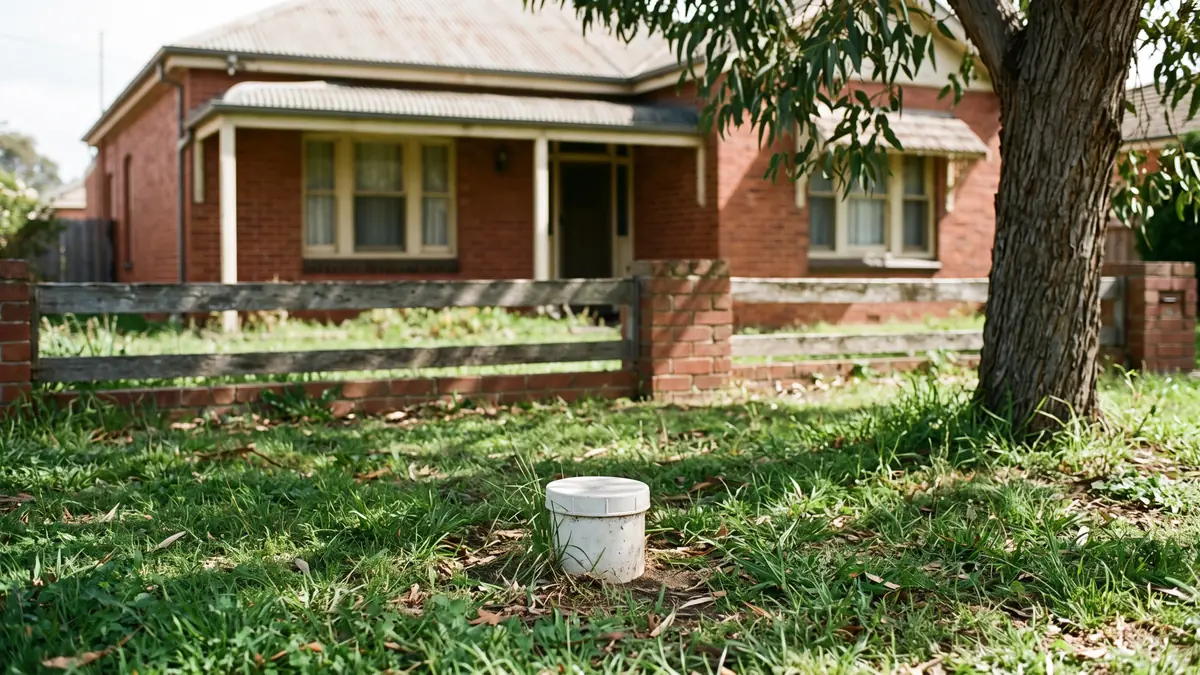
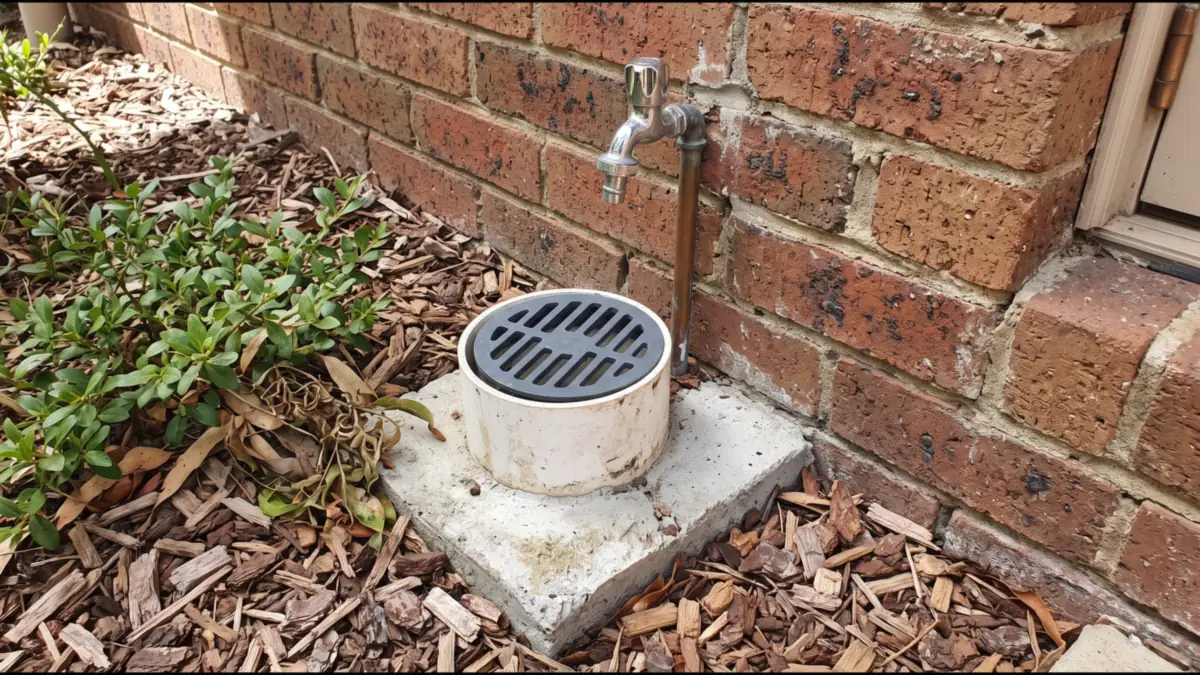
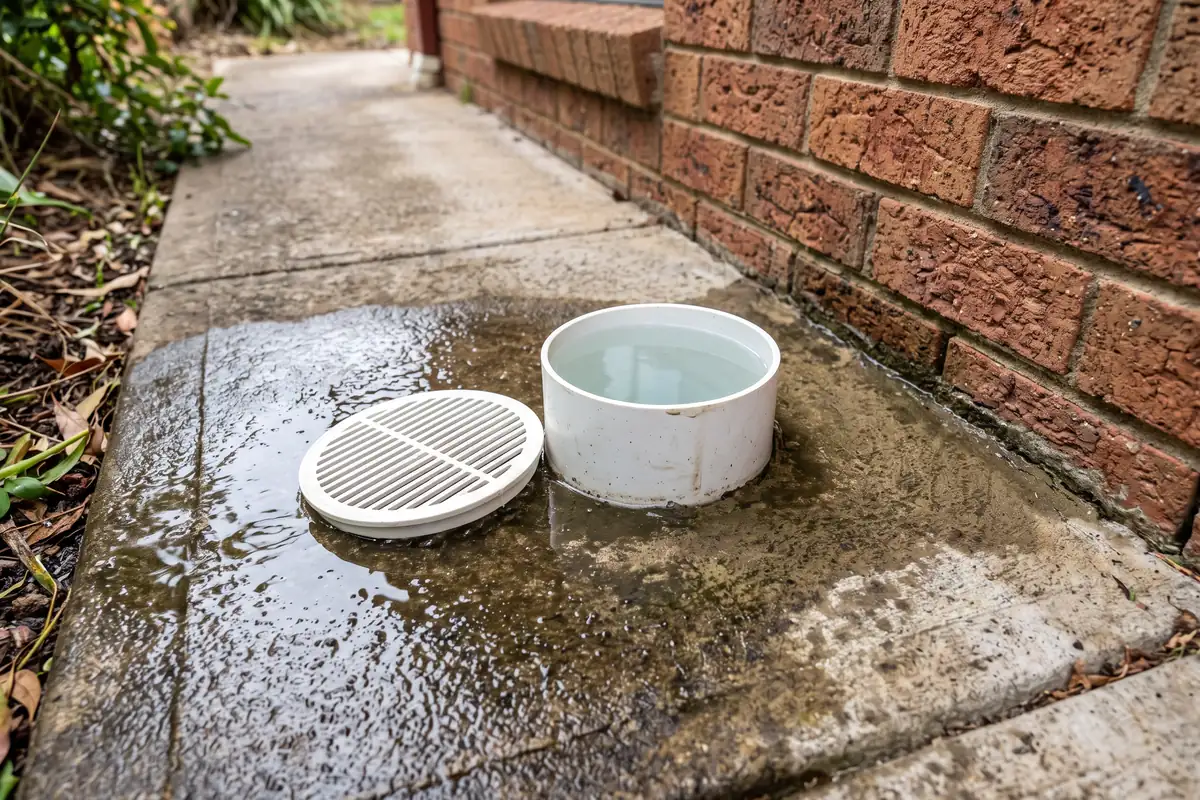
Walk around the outside of most houses and, somewhere near the kitchen or laundry, you'll find a small round grate sitting on a pipe just above the ground. That's your overflow relief gully. You've probably stepped over it for years. Then one morning there's water around it, or worse, and suddenly you want to know exactly what it is.
Think of it as the warning light on your sewer pipes. When something goes wrong underground, it's designed to show you outside, where it's easy to deal with, rather than inside, where it isn't.
Below we cover what the gully does, how to find yours, what an overflow is telling you and how to keep it working through a renovation. It's written for Sydney and Melbourne homes by the licensed plumbers at 24/7 Local Plumbers.
Everything that goes down your toilets, showers and sinks runs into a private sewer pipe under the yard, which then joins the water authority's main. If that pipe blocks, the wastewater can't just stop. It has to come out somewhere. The gully gives it an exit outside, set lower than any toilet, shower or floor waste in the house.
The job it does
When the pipe blocks, wastewater backs up until it finds the lowest opening. If the gully is working, that's the one. The grate lifts and the overflow spills into the yard instead of rising through your shower drain. Not pleasant, but a mess on the lawn beats a mess on the bathroom floor every time.
The loose gully cap is the point
The grate, or gully cap, is supposed to sit loosely. It needs to lift under pressure. So it should never be glued down, screwed down, or hidden under a heavier lid, a pot plant or a paver. A gully that can't open can't do its job.
Overflow gully vs stormwater grate
They look similar, but they're on completely different systems. An overflow gully is part of your sewer. Stormwater grates, pits and downpipe connections carry rainwater to the stormwater pipes, and the two should never be mixed.
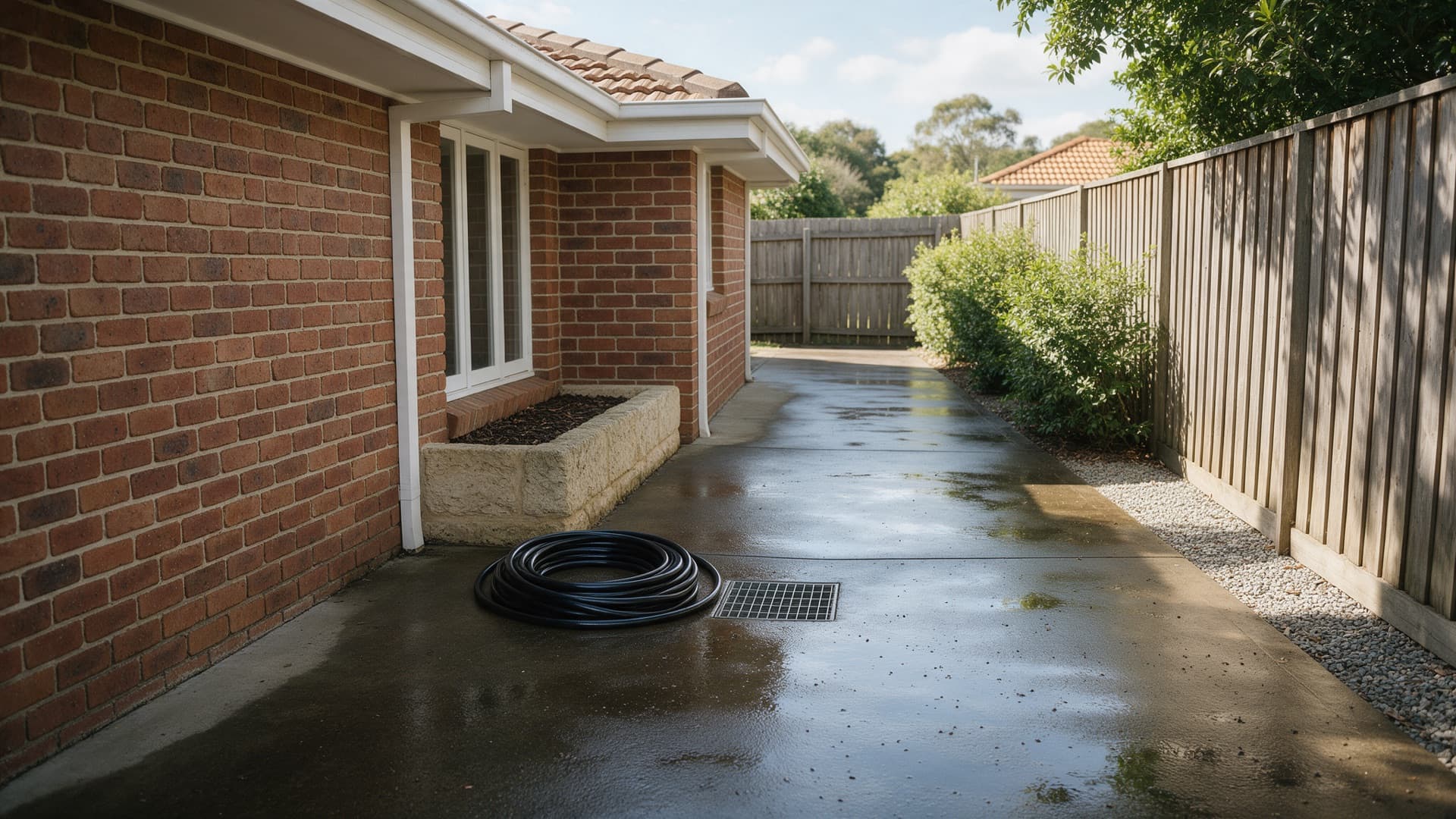
A rough way to tell them apart: the overflow gully is usually a round grate on a short pipe riser close to the house wall. Stormwater pits tend to be square, sit flush with the paving or lawn, and turn up at the bottom of downpipes or in low spots in the yard.
Where to Find Yours
Most homes have one, and in most Sydney and Melbourne houses it's within a few metres of the back or side wall.
Where they usually sit
Start outside the rooms with the most plumbing: the kitchen, the laundry, the bathroom. The gully is set so its top sits lower than the lowest fixture inside, and you'll often find it near an outside tap.
You're looking for a small round grate on a pipe that pokes just above the ground. On older homes it might have a terracotta or concrete surround. Newer homes usually have PVC.
If you can't find it
The usual answer is that it's been buried. New paving, fresh turf, raised garden beds and decks all have a habit of swallowing the gully during a renovation.
Your sewer service diagram shows where the drains run on your property, which narrows the search. If you still can't find it, a licensed plumber can locate it. Better to know where it is before you need it.
What It Means When the Gully Overflows
An overflow is a symptom. What comes out, and when, tells you a fair bit about the cause.
Wastewater at the gully: a blocked sewer pipe
Wastewater, toilet paper or a sewage smell means the private sewer pipe is almost certainly blocked somewhere past the gully. Tree roots, wipes, fat and old cracked or sunken pipes are the usual suspects, and our guide to what causes blocked drains goes through each one.
Water at the gully only in heavy rain
If it only overflows in a downpour and the water runs clean, rainwater is probably getting into the sewer. A downpipe might be connected to the wrong pipe. The gully might sit too low and flood from surface water. Or a broken pipe might be letting groundwater in. Either way it needs a plumber, because stormwater shouldn't be in the sewer at all.
Gurgling, smells or a lifted cap
Gurgling, a sewer smell nearby or a cap that has lifted with no sign of an overflow can all point to a partial blockage building up. That's your early warning. Get it looked at before it turns into the real thing.
| What you notice | Likely cause | What to do |
|---|---|---|
| Wastewater or toilet paper at the gully | Blocked private sewer pipe | Stop using water inside, call a plumber |
| Clean water at the gully in heavy rain | Stormwater getting into the sewer | Book a plumber to find the source |
| Gurgling, smell or lifted cap, no overflow | Partial blockage building | Book an inspection soon |
| Drains inside backing up too | Blockage close to the house, or the gully isn't working | Stop using water, call a plumber now |
What to Do (and Not Do) When It Overflows
It's unpleasant, but the first steps are simple.
Stop using water inside
Every flush, shower and load of washing adds to what's coming out. Stop using water until the blockage is cleared, and make sure everyone in the house knows. If a toilet is backing up as well, our blocked drains service handles sewer blockages day and night.
Keep people and pets away
Treat anything coming out of the gully as sewage. Keep kids and pets well clear, don't tread it back into the house, and wash your hands properly if you've been near it. And don't hose the overflow into a stormwater drain.
What not to do
Avoid
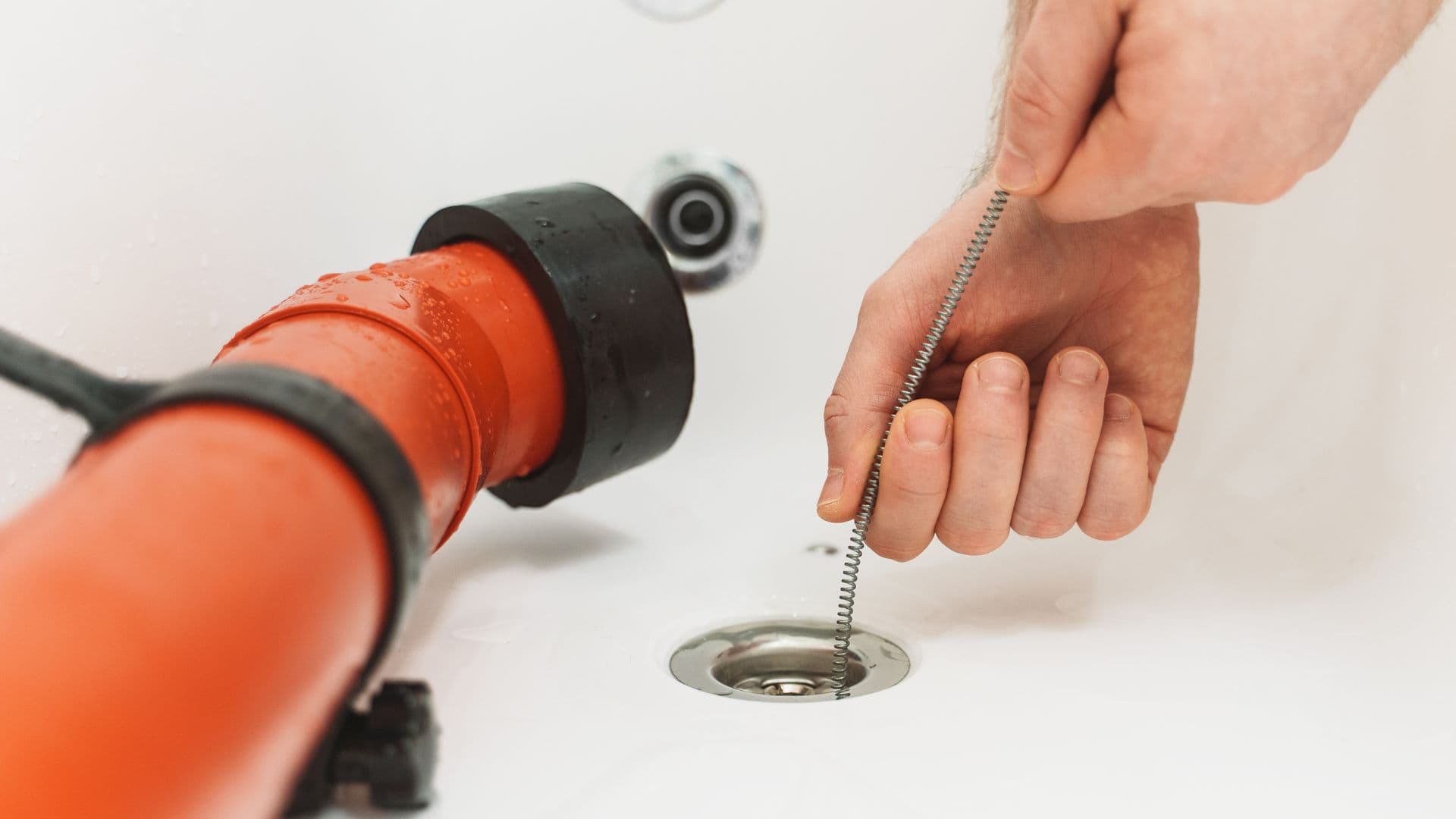
Don't put the cap back on and weigh it down. Don't seal the gully. Don't push a hose or drain rods into the sewer pipe. Holding the cap down just sends the overflow inside, and poking tools down an old clay pipe can crack the joints and pack the blockage even tighter.
Chemical drain cleaners are a waste of money here. They won't shift a blockage this size, and they leave the plumber working in caustic wastewater.
Keeping Your Gully Compliant During Renovations
This is where a lot of gullies quietly stop working. Nobody notices until the day they're needed.
The two height rules
The NSW overflow relief gully requirements set out two separate measurements, both drawn from the national plumbing standard:
- The top of the gully riser must sit at least 150 mm below the lowest fixture inside the house, so wastewater overflows outside first.
- The top must also sit at least 75 mm above the finished ground around it, so rain and garden water can't run in. In paved areas, it has to be finished so water can't pond around it.
The NSW guidance also asks plumbers to allow for future landscaping and paths. That's telling, because landscaping and paths are exactly what usually throw the heights out.
Paving, turf, garden beds and decks
Raise the ground and the gully can end up flush with the surface, below it, or under a slab. New turf counts as finished ground. Garden beds built against the house wall bury gullies all the time, and a deck can hide one completely.
If you're renovating, ask your landscaper or builder to keep the gully exposed and at the right height. If it needs raising or moving, that's drainage work for a licensed plumber.
Melbourne homes
Same principle, different authority. South East Water's sewerage guidance says it's the property owner's responsibility to make sure the home has a properly designed overflow relief gully that works.
Who looks after the pipes
The gully sits on your private sewer pipe, so in both cities it's the owner's responsibility. In Sydney, Sydney Water's guidance puts the private pipes in the owner's hands right up to the point where they join Sydney Water's main. In Melbourne, your water retailer sets the connection point, which is usually the inspection opening near the boundary. A blockage on your side of that point is a job for your plumber, not the water authority.
When to Call a Licensed Plumber
Call a plumber if the gully is overflowing, gurgling or smelling, or if you've renovated and it's gone missing.
What a plumber does
A licensed plumber will find where the pipe is blocked, clear it, and check the pipe so you know why it happened. Often the gully itself is the way in. A high-pressure jetter can go in through the gully or an inspection opening to cut through roots and fat, and our article on hydro jet drain cleaning explains how that works.
Raising or moving a gully
A buried, low or badly placed gully can be raised or moved. It's licensed drainage work, because the new heights have to meet the standard.
Gully overflowing? No call-out fee when you proceed with the repair, licensed plumbers available 24/7 across Sydney and Melbourne. Call 1300 138 780.
Final Word
It's a small fitting with a big job. Know where yours is, keep the grate loose and the top clear of the ground, and treat any overflow as a sign the sewer pipe is blocked. If you're renovating, keep it visible and at the right height.
If yours is overflowing or you can't find it, give us a call on 1300 138 780. Our licensed plumbers work across Sydney and Melbourne around the clock, with upfront fixed pricing and no call-out fee when you proceed with the repair.
Key Takeaways
- An overflow relief gully lets a blocked sewer spill outside instead of inside your home.
- It's usually a round grate on a short pipe near the kitchen, laundry or bathroom wall.
- The gully cap must stay loose and uncovered so it can lift.
- Wastewater at the gully means a blocked sewer pipe: stop using water and call a plumber.
- In NSW, the gully must sit at least 150 mm below the lowest fixture and at least 75 mm above finished ground.
- The gully is on your private sewer pipe, so it's the owner's responsibility in Sydney and Melbourne.