What a Plumbed Fridge Actually Needs
Fridges with a water dispenser or ice maker need a permanent water supply, and the connection ends up somewhere nobody looks: behind a heavy appliance, pressed against a wall, under mains pressure, for years.
That is what makes this job different from plugging in an appliance. A slow weep behind a fridge can run for months before anyone notices, and by then it is a floor repair rather than a plumbing repair.
Some of this you can do yourself. Some of it you cannot, and the line between the two is a legal one in New South Wales. This guide covers both sides of it honestly.
A Dedicated Cold Water Supply Point
The fridge needs cold water from a suitable, compliant outlet. Fridges are not designed to run from a hot line, and sharing an outlet with another appliance is not always appropriate. The same principle applies when installing a dishwasher.
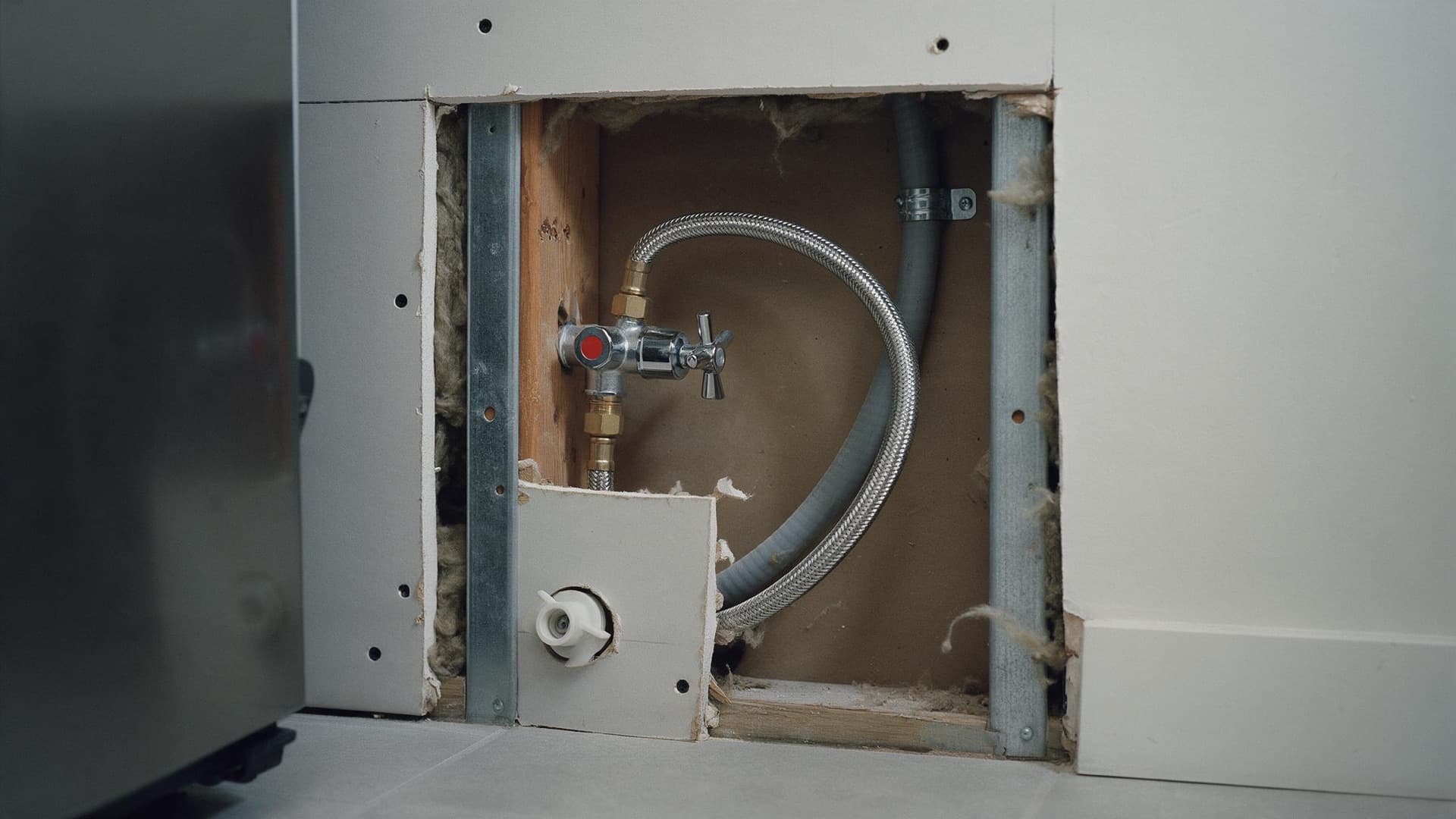
An Accessible Isolation Valve
There must be a way to shut the water off to the fridge alone, without turning off the whole house. If you ever need to change the filter, move the fridge or deal with a leak, this is the fitting that saves you.
A Connection You Can Still Reach
This is the detail most often overlooked. Once the fridge is pushed back, can you still see and reach the valve and the joint? If not, a small problem stays invisible until it is a large one.
Fittings That Meet Australian Requirements
Plumbing products used in Australia are covered by the WaterMark certification scheme. The Australian Building Codes Board explains the scheme for householders on its Always look for the WaterMark page, and the National Construction Code requires products listed on the WaterMark Schedule to be certified before a licensed plumber installs them. Flexible hose assemblies fall under their own product specification, AS 3499.
Avoid: cheap unbranded hose kits bought online. If a fitting carries no WaterMark certification, it does not belong in an Australian plumbing installation.
What You Can Do, and What Needs a Licensed Plumber
This is the part worth being clear about, because the two situations look similar from the kitchen floor and are not similar at all in law.
Homeowner Task: Connecting to an Existing Compliant Outlet
If your kitchen already has a suitable, compliant cold water outlet with its own isolation valve, sitting where the fridge goes, then connecting the appliance to that existing point is broadly comparable to connecting a washing machine. That is the scenario the next section covers.
Licensed Plumber: Anything That Changes the Plumbing
If there is no outlet where you need one, the work required is not a homeowner job. NSW Fair Trading defines water plumbing work as work connected with the supply of water, including the installation, alteration, extension, renewal and repair of pipes, fixtures, appliances and fittings. Creating a new supply point falls squarely inside that definition and requires the appropriate licence.
So if any of the following apply, the job goes to a licensed plumber:
- There is no existing outlet where the fridge will sit
- The nearest outlet is under the sink and you were planning to branch off it
- The existing outlet has no isolation valve
- You are unsure whether the outlet is compliant or what it was installed for
- Anything needs to be cut, extended or re-routed
Caution
work that requires a licence and is done without one can affect insurance and can cause problems at sale time, quite apart from the risk of the work itself. It is not worth the saving.
Connecting to an Existing Compliant Outlet
This section assumes the scenario above: a suitable, compliant cold water outlet with its own isolation valve is already in place. If that is not your situation, skip to the last section.
- Read the manufacturer's instructions first. Fridge makers specify the connection type, the inlet fitting and often the pressure range the appliance needs. These vary between models, and the instructions override general advice.
- Turn the isolation valve off and confirm it has actually stopped the flow. If you are fitting out a kitchen more broadly, our guide to kitchen sink and tap selection covers the neighbouring decisions.
- Check the supply line. Use a WaterMark certified line suited to the connection. Inspect the hose and fittings for damage before you start rather than after.
- Connect to the appliance inlet and the outlet, following the manufacturer's guidance on fitting type and tightness. Overtightening a compression fitting is as likely to cause a leak as undertightening it.
- Turn the water on slowly and watch both ends of the line for several minutes. Then dry every joint with paper towel and check again, because a slow weep is easier to see on dry metal.
- Leave a service loop. Keep enough slack that the fridge can be pulled out without dragging on the hose, but not so much that the line kinks when the fridge goes back.
- Push the fridge back gently and check the joints one more time. Then check again the following day.
Tip
put a folded sheet of paper towel under the connection for the first week. It shows up a slow leak long before the floor does.
Ice Makers and Filters
Once the water is connected, the appliance side needs a little attention too.
First Run and Purging
New ice makers usually need the first batches discarded, and dispensers need running until the water is clear. This flushes air and manufacturing residue out of the system. Check the manual for the quantity your model specifies.
Filter Replacement
Fridge water filters have a service interval, typically indicated by the appliance itself. Leaving a filter well past its interval affects taste and flow, and a heavily loaded filter is not doing the job you bought it for.
Bypass
Most fridges accept a bypass plug so the dispenser still works when a filter is overdue and you are waiting on a replacement. It is worth knowing where yours is before you need it.
Where These Installations Go Wrong
Most fridge water line problems trace back to one of four mistakes.
The Joint Nobody Checks
Connections behind fridges fail quietly. There is no puddle at first, just a damp patch in the cabinetry or the subfloor, and hidden water leaks are among the more expensive problems to find late. By the time it is visible, it has usually been running a while. Our guide to the signs of a hidden water leak covers what to watch for.
Kinked Lines
Pushing the fridge back too far crushes the hose against the wall. The line does not fail immediately, it fails later, which is why the service loop matters.
Filters Left In for Years
A filter well past its interval restricts flow and can put the connection under more strain than it was designed for.
The Wrong Outlet
Connecting to whatever is nearest, rather than a suitable point, is where a lot of these problems begin. If the only nearby outlet serves something else, that is a plumber's job, not a T piece from a hardware store.
When to Call a Licensed Plumber
Call a plumber if there is no outlet where you need one, if the existing point has no isolation valve, if you are not certain the outlet is suitable, if the connection leaks after you have made it, or if you find damp behind the fridge at any point.
Our kitchen plumbing team installs fridge and appliance supply points across Sydney. If your kitchen sink is also giving you trouble, see why kitchen sinks keep blocking.
24/7 Local Plumbers works across Sydney with a $0 call-out fee, upfront fixed pricing and a 12-month warranty on parts. Give us a call on 1300 138 780.
Key Takeaways
- A plumbed fridge needs a compliant cold water point, its own isolation valve and a joint you can still reach.
- Connecting to an existing compliant outlet is a homeowner task, and this guide covers only that scenario.
- Creating a new supply point is water plumbing work under NSW Fair Trading's definition and requires a licensed plumber.
- Fittings should be WaterMark certified, with flexible hose assemblies covered by AS 3499.
- Leave a service loop, dry the joints and check them again the next day.
- Connections behind fridges fail quietly, so check for damp periodically rather than assuming no news is good news.